Disability Studies

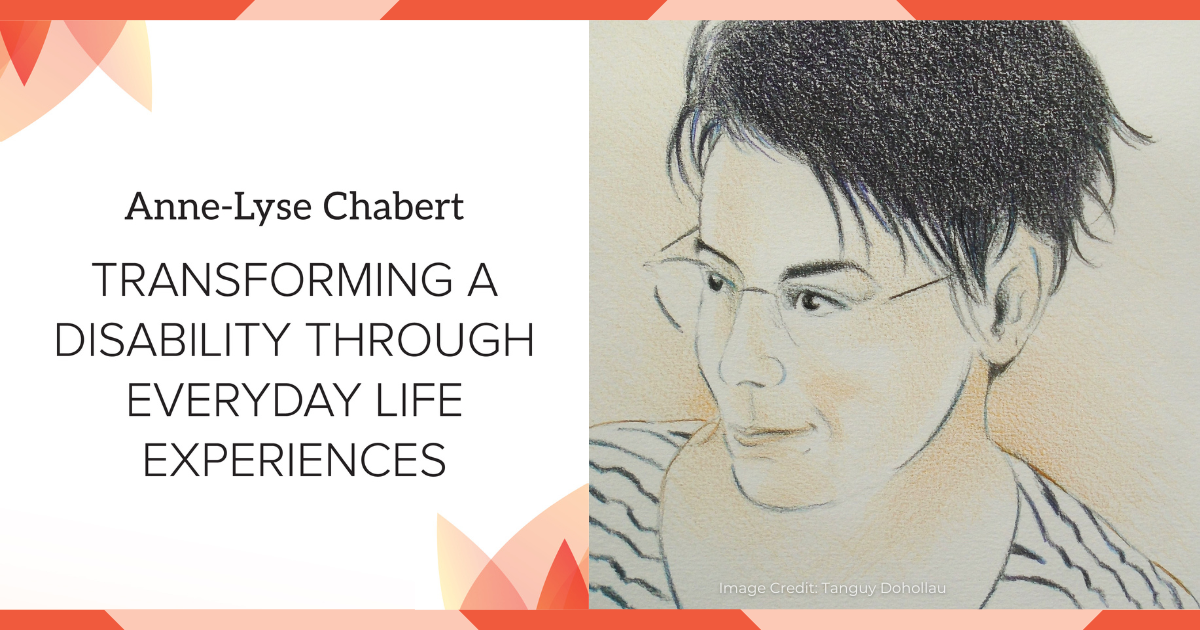
A charcoal sketch of a woman with short cropped black hair and wire rim glasses wearing a white blouse with black vertical stripes.

Redefining Disability Through Everyday Life Experiences

Drawing on individual and everyday experience, even in the humanities and social sciences, remains an innovative approach – perhaps even more so in a field as specific as disability studies. Anne-Lyse Chabert makes a case for why we must give precedence above all else to the day-to-day experience of disabled individuals who reconstruct their relationship with the world in a different way.

A two-story white brick building in disrepair with broken windows and surrounded by overgrown brush and grass. A flight of cement steps and a metal railing lead to the front door.

Trading Bars: Prisons as De Facto Mental Institutions

Individuals with severe mental illness (SMI) have been barred from “polite” society throughout history. Many will eventually find their way to prison, behind a different set of bars, where there is little incentive to treat. Have we simply traded one form of confinement for another, even more cruel one?

A lone person, facing away, walking through the forest with lots of tress.

Autism Was Never an Accident

Autism was never an accident of Tylenol or vaccines or industrial life. It is not a side effect to be managed, nor a pathology to be cured. Autism has been preserved through millennia of natural selection as our ongoing contribution to humanity’s survival.

Collage of three images: 1) black & white image of Marinus van der Lubbe in court (September, 1933); 2) Commemorative plaque at the Memorial to the Victims of Euthanasia Murders in Brandenburg an der Havel; 3) Video still image of Robert F. Kennedy Jr. with header caption, "RFK Jr.: Autism 'destroys' children."

Autism and the Modern Eugenics Movement

Autism and neurodivergent rights seem to be making an impact on our daily lives, with more emphasis on inclusion and recognition of differences. On the ground, things look very different. Autistic author Jorik Mol shares his assessment of current issues for neurodivergent communities in the Anglosphere, placing autistic rights in the context of renewed enthusiasm for eugenics in the 21st century.

5 women dressed in stylish activewear. IMAGE CREDIT: Chamiah Dewey, designer and founder of Dewey Clothing, London. The photo was from this collaboration with Selfridge. Used with permission. 

Adaptive Clothing: Addressing Inequity in Fashion for People with Disabilities

Although adaptivewear is a formally recognized category of clothing, it is not given much attention in fashion education programs. Adaptive clothing is often presented as a separate category and is not integrated into mainstream fashion assignments and educational collections. This can lead to a sense of separation that limits the visibility of adaptive clothing as a design and production opportunity for students.

Scroll to Top