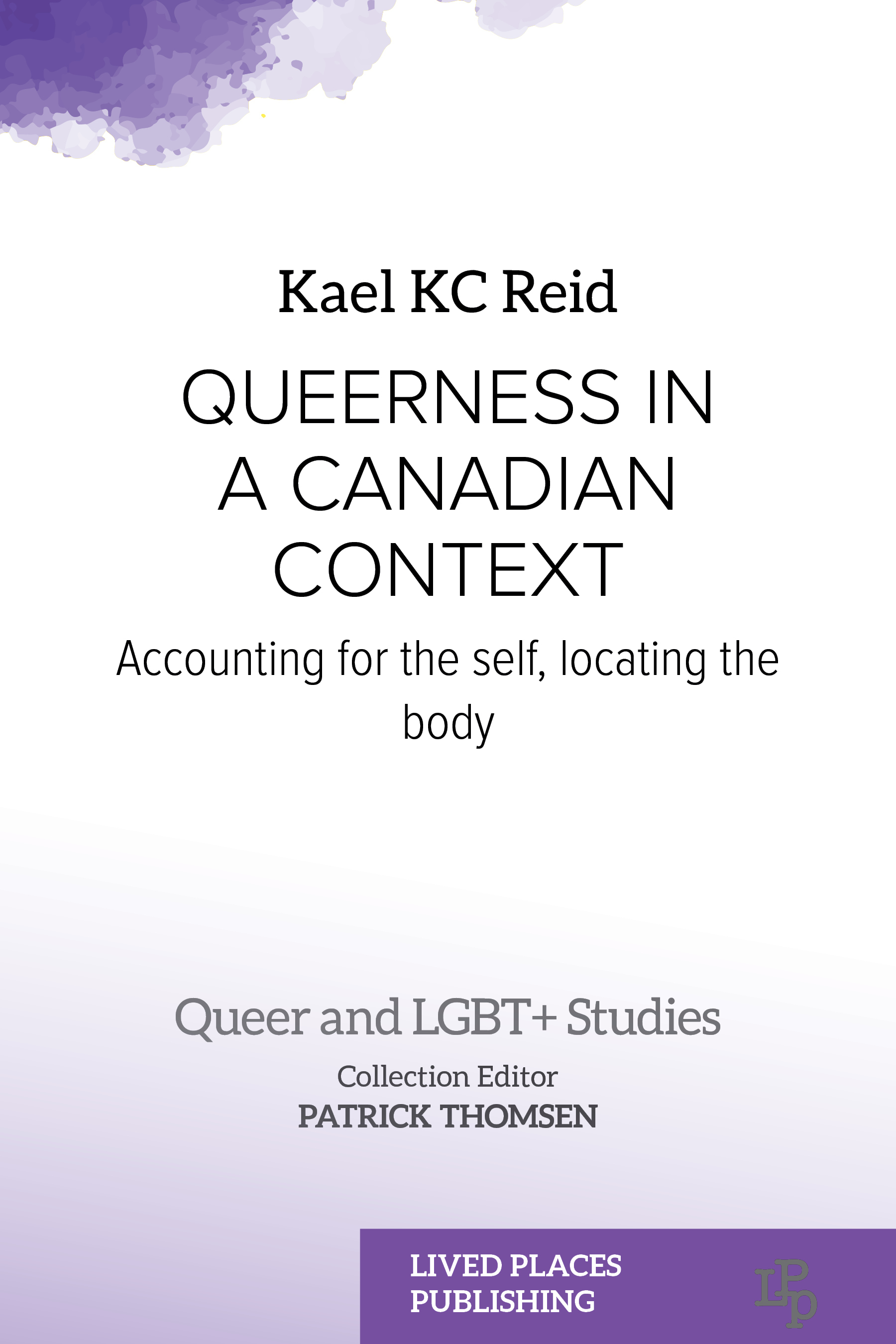
Explore the connections between queerness, embodiment, and locality through the lens of collected stories and poetry from a genderqueer musician living in Canada.
 Twitter
 Facebook
 WhatsApp
 LinkedIn
About The Book
Table of Contents
About The Author
About Open License
How do queerness, place, embodiment, movement, and relationality connect and intersect within identity?
Through collected stories, lyrics, and poems, genderqueer author Kael Reid explores the messiness and complexity of life and identity. Drawn from the author’s lived experience, this autobiographical collection reflects on identity development, relationships with people and places, movement, and what it means to inhabit a queer body that is always becoming.
This collection is ideal reading for students of Queer and LGBT+ Studies, English Literature, Canadian Studies, Gender Studies, and related courses.
Contents
Kael Reid is an Assistant Professor in Children, Childhood and Youth Studies with the Faculty of Liberal Arts and Professional Studies at York University in Toronto, Canada. They are also a genderqueer singer-songwriter and musician and use collaborative songwriting and recording in their research with young people and adults.
How do queerness, place, embodiment, movement, and relationality connect and intersect within identity?
Through collected stories, lyrics, and poems, genderqueer author Kael Reid explores the messiness and complexity of life and identity. Drawn from the author’s lived experience, this autobiographical collection reflects on identity development, relationships with people and places, movement, and what it means to inhabit a queer body that is always becoming.
This collection is ideal reading for students of Queer and LGBT+ Studies, English Literature, Canadian Studies, Gender Studies, and related courses.
Contents
Kael Reid is an Assistant Professor in Children, Childhood and Youth Studies with the Faculty of Liberal Arts and Professional Studies at York University in Toronto, Canada. They are also a genderqueer singer-songwriter and musician and use collaborative songwriting and recording in their research with young people and adults.
Rate this Book
Tell us what you think.