On panic narratives, the Solitary Forager Hypothesis, and the power of place
The latest reports of RFK Jr. and his administration recycling old panic narratives – this time reviving the tired claim that Tylenol “causes” autism – would be laughable if they weren’t so dangerous. We’ve been here before: vaccines, baby formula, gluten, Wi-Fi, now paracetamol. The script is always the same. Something ordinary, something widely used, is recast as culprit. Autism becomes the bogeyman, the thing to be prevented, the spectre to be eliminated. And a whole apparatus of fear, grift, and cure-peddling is reactivated, once again distracting from the truth.
The truth is not elusive. It’s been documented, mapped, and lived. My 2023 book, No Place for Autism? Exploring the Solitary Forager Hypothesis of Autism in Light of Place Identity, was written precisely to cut through this noise. With hundreds of references and decades of lived reflection, it shows what the science, anthropology, and history all tell us: autism is not some accident of modern chemistry. It is not a side effect to be managed, nor a pathology to be cured. Autism is a longstanding, genetically heritable neurotype – preserved through millennia of natural selection because it is evolutionarily useful.
The Solitary Forager Hypothesis gives us a way to understand why. Our wandering, our capacity to step outside the collective rhythm, to notice patterns others miss, to sustain solitude and persist in focused inquiry – these are not deficits. They are adaptations, forged in the long arc of human survival. The solitary forager was the one who ensured new ground was explored, new food sources uncovered, new dangers detected. What looks like “difference” from a modern vantage point was, in evolutionary context, indispensable. Natural selection did not discard us because we were costly; it preserved us because we were necessary.
And yet evolutionary utility alone does not dictate experience. Place identity – the where of our being – shapes both how we understand ourselves as autistic and how society views us. In some contexts, our wandering is celebrated as exploration; in others, it is punished as defiance. A trait that once safeguarded community survival can, under capitalism’s gaze, be reframed as pathology. Geography, culture, and economy interact with neurology to determine whether we are seen as gifted, eccentric, disabled, or dangerous. The autistic neurotype is constant; its meaning shifts with place.
To explore autism in light of place identity is to recognise a double truth: we are here because our systems worked, evolutionarily and genetically. And we are here differently depending on where “here” happens to be. In a supportive ecology, our foraging becomes contribution. In a hostile one, it becomes liability. This is not because autism changes, but because context does.
What RFK Jr. and his circle refuse to acknowledge is precisely this: that autism is not a threat to be contained but a variation to be understood. Their obsession with finding external poisons only reveals the poverty of their imagination – and their fear of admitting that autistic people belong. If you grant that we have always been here, that our traits carried humanity through ice ages and migrations, then the panic collapses. The myths lose their grip. And what remains is the simple, radical truth: autistic systems are not broken. They are misread, their long-preserved utility hidden beneath layers of cultural prejudice and misplaced fear.
So let us be clear. Autism was never an accident of Tylenol or vaccines or industrial life. Autism is us – our lineage, our inheritance, our ongoing contribution to humanity’s survival. The panic will come and go, dressed in new costumes each generation. But the deeper story endures. We are here because we were always meant to be here.
Jaime Hoerricks PhD (she/they) is a non-verbal autistic advocate, researcher, educator, and author. She is based in California, US, and currently works as a special education teacher.
She has two books published with Lived Places Publishing:
- No Place for Autism? Exploring the Solitary Forager Hypothesis of Autism in Light of Place Identity
- Holistic Language Instruction: Addressing Literacy in Standard and Non-Standard Populations
And a third one forthcoming: Decolonising Language Education: Reframing English Language Development for Multilingual and Neurodiverse Learners (Oct 2025).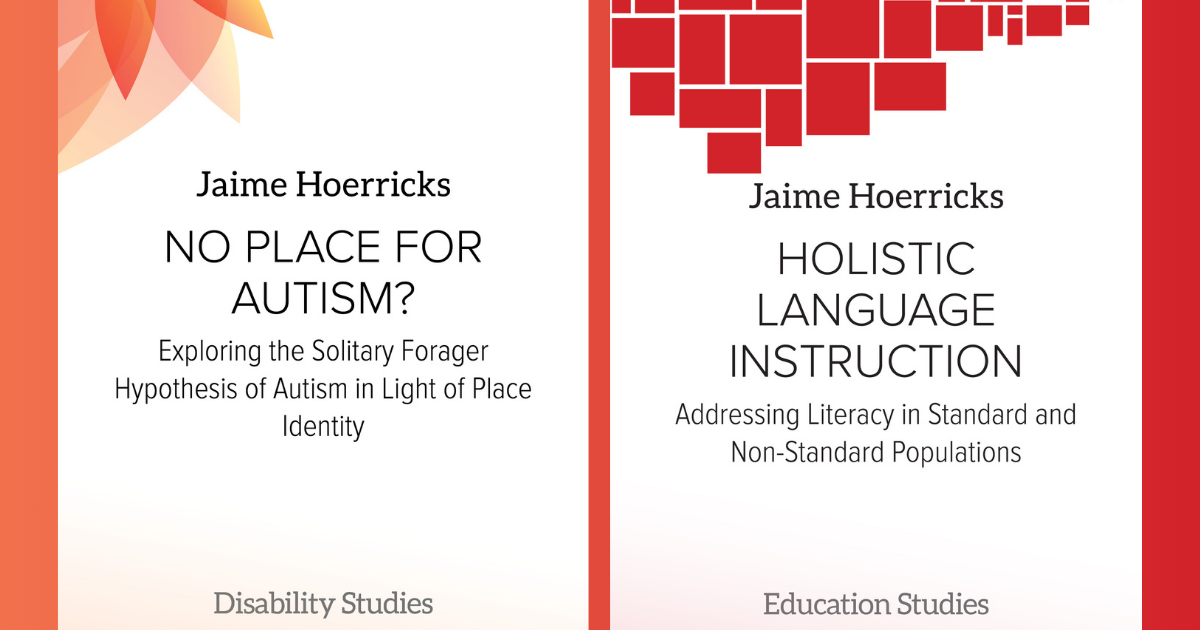
We want our books to be available to as many people as possible. If you’d like to purchase an individual copy, please email us and we’ll give you a discount code:
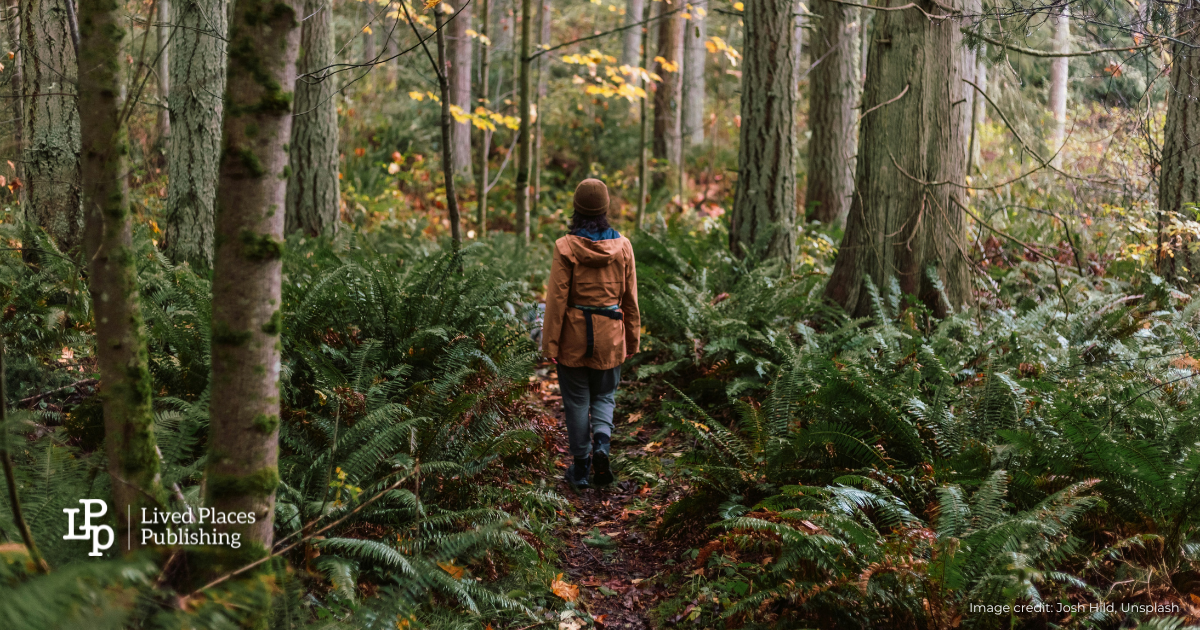
IMAGE CREDIT: Photo by Josh Hild on Unsplash.
The views presented in this post are based on the author’s perspective and experiences. The views and perspectives of the author are not necessarily those of the publisher. Our role as a publisher is to ensure many and varied voices are heard openly and unfiltered and that diverse life experiences find expression in our books, blog posts, and other media. We support our authors fiercely, but we do not always share their opinions or perspectives.