
 The Decolonial Studies Collection seeks contributions that interrogate the ‘university’ as a singular, colonial formation, a space that has historically universalised its own epistemic, cultural, and ontological logics while systematically refusing other ways of knowing, being-in-the-world, and relating that characterise ‘pluriversity’. We welcome thought-provoking work that examines ways in which colonial histories and their afterlives continue to shape cultural imperialism, constrain thought-scapes, and reproduce ontological injustices, as well as work that gestures toward the possibilities opened by decolonial praxis. Through scholarly, practice-based, conceptual, speculative, creative provocations, theoretically rich work, the aim is to liberate imagination from oppressive systems, traversing disciplinary boundaries, embracing pluri(di)versity, refusal, entanglement and relational knowledge-making praxis.
The Collection welcome contributions from academics, administrators, librarians, archivists, student services staff, equality diversity inclusion leaders, artists, photographers, and museum, gallery, and heritage practitioners whose work cultivates relational, embodied, and imaginative practices of decoloniality that de-link from the colonial matrix of power, epistemic and ontological framing, disciplinary assumptions, and institutional norms, to open up space for other ways of knowing and being-in-the-world, relating, and imagining. Key sites of focus may include institutions and infrastructures that curate, (re)produce, and legitimise knowledge such as university, libraries, archival records, museums, art galleries, pedagogical spaces, leadership structures, student services, and media or communications platforms. We seek books that creatively disrupt these spaces, attending to what is visible and to the hidden, sedimented, and relational, inviting a (re-)imagination of how we teach, (un)learn, lead, re-search, curate, archive, nurture, relate and re-member and hold space for liberated thought, affording possibilities of getting ‘unstuck’ from the status quo.
The Collection posits decoloniality as an analytical and relational praxis, inviting provocations and interrogations of ways in which colonial logics shape policy, governance, quality assurance, curricula, re-search cultures, and relational encounters, while simultaneously cultivating alternative futures entangled in relationality, justice, collective healing, anti-complicity and co-liberatory praxis. It is an ongoing process of epistemic and ontological composting, allowing colonial residues to decompose and breathe space for pluriversal imaginaries that affirm the legitimacy of a plurality of worlds.
My writer-editor collaboration is grounded in living values of dignity, relationality, care, and respect. It is intentionally unconventional and embraces dialogue, co-thinking and (un)learning as a radical openness to other ways of being and knowing that nurtures the author’s voice rather than constraining it. Thus, editorial processes are anchored in relational ethics of care, response-ability, collective accountability, and in facilitating the writing process through regular check-ins and feedback.
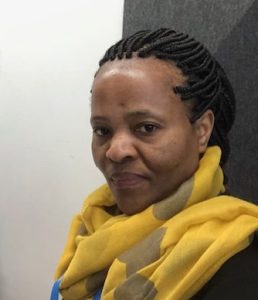 Dr. Josephine Gabi is an Associate Professor (Reader) of Higher Education at Manchester Metropolitan University in the UK. Grounded in Black feminist thought and informed by antiracist and anticolonial praxis, Josephine’s scholarship interrogates (dis)embodied research, ethics and practices in higher education, with a particular focus on undoing coloniality in relational encounters. Josephine is the is the co-editor, with Dr Clelia O. Rodríguez, of ‘Who Are You Without Colonialism?: Pedagogies of Liberation’. Her research engages with post-qualitative methodologies and ethics as response-ability, advancing a critical orientation to research that foregrounds the inseparability of ontology, epistemology, and ethics. Josephine’s theoretical orientation integrates Black feminist new materialism, Ubuntu philosophy, posthumanism, and assemblage theory within research and pedagogy.