
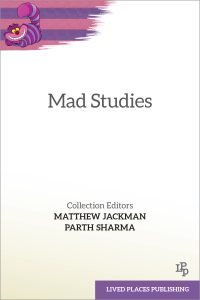
 What we understand as mental health has been borrowed from ableist, Eurocentric, colonial, cisgender, heterosexual, and class-privileged principles. Systems that continue to be deeply rooted in carcerality, white supremacy, caste violence, and late-stage capitalism define categories of knowledge, illness, and care. These interconnected oppressive systems form the Mental Health Industrial Complex (MHIC). While the emergence of lived-experience movements has challenged aspects of this industrial complex, they often remain limited to voluntary, consultative, or tokenistic roles for people from the Global North.
In a polycrisis where mental health, education, and identity continue to be depoliticized, ‘madness’ emerges as a praxis of resistance. This Mad Studies collection centers madness as lived experience: as story, memory, rupture, resistance, and world-making. It approaches madness not as pathology to be corrected, but as a site of knowledge produced through survival, struggle, creativity, and refusal.
Mad Studies emerged from psychiatric survivorship, user/refuser movements, Mad Pride activism, disability justice, and global resistance to coercion. At its core is the insistence that those who live madness must also theorize it. This collection seeks writing that captures how madness is felt in the body, narrated across generations, shaped by culture and country, and negotiated within psychiatric, colonial, and neoliberal systems.
We invite contributions that dwell in the personal without reducing it to confession. How does psychiatric diagnosis land in a family, a community, a language? How is it resisted, reclaimed, or reworked in everyday life? What does recovery, refusal, or transformation look like from the inside? We welcome collective biography, autoethnography, testimony, creative nonfiction, and hybrid forms that honor storytelling as theory.
Particular attention will be given to voices often marginalized within Mad discourse itself—queer and trans Mad lives, Global South movements, Indigenous and community-controlled initiatives, diasporic and migrant experiences, rural contexts, and those living at the intersections of race, class, gender, and displacement. We are especially interested in how local stories illuminate what global mental health frameworks frequently overlook.
This collection aims to build an archive of lived experience that is analytically rigorous yet deeply personal, and that demonstrates how telling one’s story can be an act of theory, resistance, and collective imagination.
As co-editors, we aim to support contributors, particularly community and emerging writers, to shape their lived narratives into powerful, accessible scholarship while preserving their voice, cadence, and integrity.
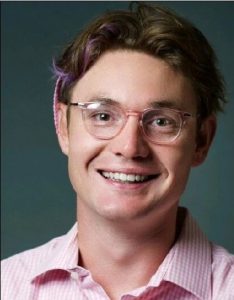 Matthew Jackman (they/them) is a Mad activist and researcher working at the intersections of Mad Studies, critical global mental health, and lived experience leadership. They are a PhD candidate at the University of Sydney, where their research examines the contemporary politics, and future directions of international Mad movements, including psychosocial disability advocacy in the Global Majority. Matthew has over a decade of experience in international Mad activism and movement organising, working to amplify lived experience knowledge and challenge coercive psychiatric systems. They have contributed to several World Health Organization initiatives on meaningful engagement and peer support in mental health systems and currently serve as a Commissioner on the Lancet Commission on Lived Experience in Mental Health Research. They are the founder of Mad Pride organisations, ‘TACFLE’ The Australian Centre for Lived Experience and Mad Collective. With a background in peer support and advocacy, social work, forensic mental health, and disability policy, their work bridges scholarship, policy, and social movements to advance rights-based and community-led alternatives in mental health.
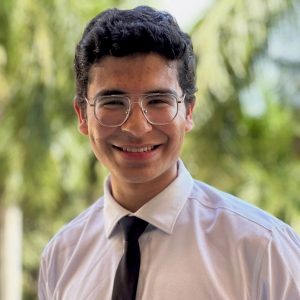 Parth Sharma (he/they) is an abolitionist, anti-colonial scholar, and mad activist working to disrupt the Mental Health Industrial Complex and advance the collective liberation of all oppressed people. Their scholarship illuminates the need for reflexive, power-aware, and intersectional perspectives in mental health.
With extensive experience in critical global mental health, their previous work includes advising the World Health Organization on the Self-Care series for The Lancet, serving on an expert panel for GOARN (Global Outbreak Alert and Response Network) on anti-stigma guidelines, and leading the Asia/Oceania region as chairperson and mentor for Aves MH (Global Mental Health Peer Network).
They currently serve as a consultant on ethics and youth mental health for Sangath India; advise the Possibilities Collective for Generation Mental Health; and contribute to Research Ready for Harvard University in collaboration with Aves MH (Global Mental Health Peer Network). They also serve as the inaugural Deputy Principal Coordinator at the Movement for Global Mental Health (MGMH).
Parth is part of several expert panels, including PLOS Mental Health, the International Alliance of Mental Health Research Funders (IAMHRF), and the Center for Evidence and Implementation (CEI), as well as collaborative projects led by Science for Practice, the McPin Foundation, and the MHPSS Collaborative.
Parth also serves as faculty on the ‘Global Mental Health in Asia’ course (SingHealth Duke-NUS Global Health Institute, Singapore); the ‘Queer and Trans Mental Health’ course (Hansraj College, India); and ‘Education for Dialogue, Maitri and Justice’ (Eklavya Foundation, India) intentionally agitating for power redistribution, accountability, and political education.