
“Having a doctor take you seriously is so bizarre,” commented my neighbor, who had just come back from a routine visit at a low cost community health clinic. “And you tell me they’re not actually doctors?” To him, this was a headscratcher since like many people, he had a very impersonal and distant rapport with physicians in general. And the fact that the medical student who assisted in the routine visit was a gracious young man was unusual, because didn’t students just carouse in the local bars and generally make trouble?
Growing up in the small former steelworker town of Bethlehem, Pennsylvania, some local natives didn’t say much about the local hospital since people were used to going without since the steel mills closed. The fact that the rapidly modernizing hospital network added a medical school largely escaped my notice for a few more months until a third year medical student named Brianna Talbot asked me, her favorite librarian, to join her on a journey to becoming a physician (I also eventually became her husband).

The St. Luke’s hospital always brings to mind “Medice, cura te ipsum” (Physician, heal thyself) given the hospital’s historical namesake. The fact that St. Luke’s actually lived up to its namesake and escaped even my Bethlehem native’s eye is not surprising whatsoever given the recent rapid pace of its growth and evolution. Understanding the St. Luke’s passion for compassionate care requires slowing down, taking your eye off your insurance copay receipts, and putting yourself into a position of seeing and hearing the interactions between physicians and patients.
My future wife had a beautiful ritual of sharing with me the profound experiences at the end of her medical student shifts, which she continues to this day as a psychiatrist. I remember the first noteworthy story quite clearly: Brianna telli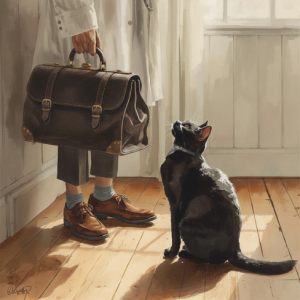 ng the story softly and as gently as the strokes she was giving to our cat’s glossy black fur.
On the inpatient psychiatric unit she interviewed a middle-aged male patient who was there on a voluntary admission for depression and suicidal ideation. This man struggled with the shame and guilt from feeling “crazy” that he needed a hospital stay. Brianna described the importance of mindfulness of why it is difficult for anyone, especially men, to acknowledge when they’re struggling with mental health and the shame of getting help. She took the approach of validating the reasons why it can be so difficult to ask for help and that depression can affect anyone and it is not something you choose. Bri explained he actually exhibited a great deal of self-awareness and strength in taking the first and hardest step to get help.
Coming from a family with a physician background, I remember I was a little nervous thinking that okay this is the part where the naturally compassionate medical student gets read the riot act by the attending physician (supervising doctor) for going off script during the standard clinical assessment, even if the patient reacted positively. However, this is where my neighbor’s positive comments about being seen and heard in the community clinic began to make sense. The attending physician not only validated Brianna’s approach but said that as a medical student, she had done a great job and this was a good way to incorporate some patient-centered talk therapy. It clicked for me: these medical students were actively being taught to incorporate humanity into their practice. But surely, it was just this one part of the medical school faculty?
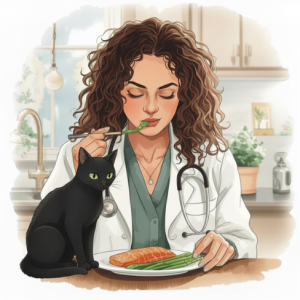 Some time later during my wife’s medical school career, I was tossing asparagus with olive oil, fresh garlic, and some dill and chives. If the hospital gives out some herb plants from its own community gardens, the obvious choice is you make a marinade for salmon. My wife crashed through the front door after an hour and forty five minute drive from the clinic and began excitedly talking about the wonders of practicing rural medicine. A few days ago, a patient came into the St. Luke’s clinic, spitting fire like the lifelong old hand from coal country that he was since the power company had turned off his electricity.
I recalled having heard about the gentleman before since the resident physician (doctor in training, for the uninitiated) on duty had been taken aback by the man’s fiery disposition and been unclear on how to handle a tense situation. What had my wife so excited about being a part of St. Luke’s was that a faculty physician named Dr. T personally directed the students and residents on how to handle these scenarios. His explanation was that doctors needed to keep a certain mindset about how handling the socioeconomic conditions of the patients is an intentional part of the curriculum at St. Luke’s, because one has to integrate the humanity and dignity of a person into patient care. Dr. T then explained that in fact, they did fill out the power company’s financial hardship exemption forms for their patients and a doctor steps up when the usual support staff is so overwhelmed.

This intentionality about medicine and the way it touches humanity was constantly reflected in my wife’s journey through the medical education system at St. Luke’s. I admit my faults here with this next story at being an imprecise former historian since I forget at which point in the timeline this happened. My wish here is to express a heartfelt gratitude for all the doctors who still conduct house calls and this gentleman physician who took my wife with him along on these patient visits. Brianna described his mindset as an intentional one where doctors ought to meet patients where they are and the physician’s ego ought to be examined as part of the equation. He spoke to my wife about questioning one’s own internal physician narrative: “Is it your care plan? This is actually the patient’s care plan. Make sure that you know whether what you’re about to do is what you want or what the patient wants.”
I write about this specific intentional mindset because I believe at the core of our humanity resides a desire to do good onto others. I cannot cite innovative initiatives at St. Luke’s where the hospital strays far from medical school orthodoxy and has these specific replicable methods because I truly believe they have a certain je ne sais quoi embedded in their culture where this compassion centered mindset is encouraged but not demanded of everyone. This is a mindset where Medice, cura te ipsum means that even with the intense busyness inherent in the business of medicine, there is still room for an intentional focus on one’s own humanity. There are so many stories to tell that would take far too much space on this page.
The story that stuck with me the most is because my wife agonized whether or not her life’s mission was in the practice of psychiatry but she found the answer in a surprising way during her time serving at a St. Luke’s hospice care home. In the practice of medicine, all physicians wrestle with the fact that at times, no cure or remedy exists and a patient’s life is at its conclusion. An elderly woman was being cared for at the hospice home and the gathered family spoke of how the patient always religiously had her hair and nails done professionally, but coming to the hospice house had prevented that from happening recently. My wife asked the family if she could bring her own nail care kit and apply some polish.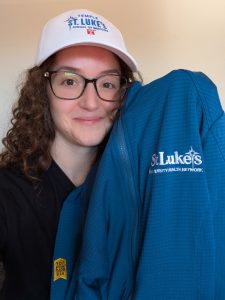
The next day, Brianna brought in her manicure equipment but the patient was no longer able to respond verbally and remained unconscious. When Brianna was worried about the conventions and considerations in this situation, the attending physician said not only did the patient give consent the day before, but part of becoming a physician was intentionally taking care of a patient though attention to an individual’s humanity: a manicure and some nail polish would add, not subtract, from the patient’s dignity.
Some time afterwards, the hospice care attending physician took Brianna aside and addressed her doubt about psychiatry. The doctors in hospice care at St. Luke’s understood intuitively that all the layers covering one’s humanity are removed at the end of a person’s life and that the core nature of what it means to be human is your mind. Psychiatry was not a field that was so easily reduced to dispensing medications and rote psychotherapy but the art of healing someone’s mind and protecting the very essence of being an individual. This doctor gave Brianna a directive: “keep bringing humanity into psychiatry.”
The intangible about St. Luke’s is this compassionate mindset where the core value of respecting humanity is embedded throughout their culture and values. Our empathy and care for every individual as a unique human being doesn’t stop with education, curriculum, certifications, and other tangible means. Treating individuals as unique human beings with their own special divine spark is a matter of mindset and a person’s own heartfelt empathy.

This humanity-centered mindset begins with valuing the distinctness of someone’s lived experiences. There is no book collection that teaches us about the entire breadth of human lived experiences since those volumes would take up so much shelf space or data storage that no one person could read all those stories. What I can tell you is that my journey with my wife through medicine has taught me that there is a duty within all of us to cultivate and encourage a consistent everyday commitment to humanity.
The question I have found most crucial is how does one actively do this on a day to day level for a large organization full of people who are or will be eventually serving others? For example, physicians often work six days a week up to eighty hours in total and one in seven resident physicians likely suffer from some type of food insecurity (I am currently sitting in the cafeteria of one of the hospitals in the network cited in said article while my wife sets broken bones and other doctor things upstairs in the stifling heat of the inadequate hospital HVAC).

In our human nature, we interpret our perceptions of those that possess more privilege than others as needing to “try harder” or “do more” as if the lack of effort was the problem. I remembered from years before one of my wife’s classmates yelling excitedly that she wanted to “level up” to be just like the medical school’s dean. According to this young woman, the dean told her to stay curious and compassionate and not to just try harder to do everything herself, leading to her independent conclusion that feeling guilt-ridden about privilege got in the way of caring for others. Their dean, known as “Dr. E,” has kept dispensing invaluable advice to students and encouraged my wife to stay local and keep leading through example and service to the community and has repeatedly through the years told Brianna to keep her humanity in medicine, no matter who told her otherwise.
To the reader of this article, I enthusiastically believe that you can also be a Dr. E in your own organization or circle and help others stay curious and compassionate. This begins with the humanity-centered mindset I just told you about, but also includes lifting up and encouraging others to boldly go and explore, even if the topics are new, uncomfortable, or goes against the crowd. Medicine isn’t the only profession or calling where introspection on humanity and dignity is difficult when 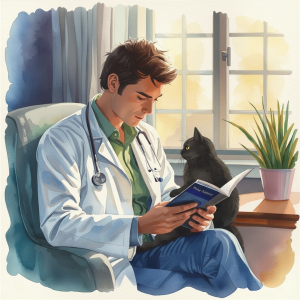 you’re up against the clock and exhausted. You don’t have to be the dean or CEO of anything to begin leading about mindset.
I want to issue a challenge to you regarding reading new books that cultivate this calling to humanity and leading through action. If you find a book useful and inspirational, share it with others and don’t keep it to yourself. When you find that the book could teach others in your circle, go forth and teach those lessons. And if you’re a librarian, don’t just put it on the shelf and call it a day. Here’s a list of some titles you could begin with:
- When Breath Becomes Air by Paul Kalanithi – Dr. Huang-Talbot found this book incredibly moving and meaningful about the preciousness of life itself thand how medicine cannot be practiced through intelligence alone but also requires a person’s alignment with morality. In the author’s sixth year of residency, the roles reverse and the doctor finds himself as the patient.
- The Deepest Well by Nadine Burke Harris – An uncomfortable look at the assumptions we make about those around us and their lived experiences in the context of a hidden epidemic that challenges the egos and biases of those in positions of power.
- Beyond Band of Brothers by Richard Winters – If you haven’t seen the HBO television series, it deserves its own separate recognition. The autobiography from the real-life Richard Winters serves as its own account of leadership through action and example.
- Iacocca: An Autobiography by Lee Iacocca and William Novak – This classic memoir of a kid from Allentown, PA (right next door to Bethlehem, PA) and stepping up into leadership with grace and taking active responsibility for the outcome. Prof. Huang (my father) always loved this book.
- Tuesdays with Morrie by Mitch Albom – Brianna recommends this book for its lessons on the meaning inherent in loving others and actualizing something that gives you purpose, even in the face of death.
- All Creatures Great and Small by James Herriot – Partially fictional but the complete set of books is one of the favorite gifts that my wife has ever received. Not only are the books embedded with a respect for all living things but they also provide easily readable chunks of lessons on humility in serving one’s community.
I remember reading from All Creatures Great and Small the day my wife and I took our engagement photos in a field of flowers behind one of the St. Luke’s hospitals. I asked her if she ever thought about working with the network and she responded that this was something she had thought about. I quote “the difference is they stand behind you when you see the opportunity to show your humanity.” I wondered to myself if we were going to have to live the country doctor life.

That was prophetic since my wife and I now live in the mountains of Pennsylvania, where she labors as a rural psychiatrist resident with St. Luke’s. A few weeks ago she had her reunion with Dr. T, from the rural clinic, who she’s planning to ask about how to embed psychiatry clinics inside of primary care offices. I chuckled and said that sounded complex and expensive but my wife chided me that part of the adventure in medicine is learning how things function and maybe this wouldn’t actually work but it never hurts to find an opportunity to help people who struggle to find time for just one appointment and might even distrust a psychiatrist.
Bri explained that Dr. T came from a rough socioeconomic background and he actually cares about these things, which is part of why she felt inspired to try new ideas. It touched my wife’s soul that someone’s background has profoundly touched the way he treated others and intersected with the needs rural patients that make up their main clientele. In my wife’s words, perhaps the patients would be able to schedule a followup appointment or go right into a psychiatry appointment after their annual checkup, now that they’re no longer scared because they’ve met a real life psychiatrist! I have to admit I was embarrassed by my initial response since we should always be finding new opportunities to bridge gaps and care for others.
I realized recently I think about Dr. T and Dr. E often in my day to day work as a librarian. You never do know who walks into your library’s doors and where they’ve been in life and how they might need help in unconventional ways. Maybe a university student doesn’t need help filling out hardship paperwork with the power company but who knows how their lived experience intersects with your workplace. When someone at the library needs help these days, I channel my “Inner Dr. E” and try to consider where I’m inadvertently asking someone just to try harder versus genuinely approaching the situation with curiosity.

My wife takes with her every single day an admiration of how she was taught to practice medicine and the physicians at St. Luke’s that nurtured this respect for humanity. I think often about her stories in medicine and wonder if libraries could take a page from “physician, heal thyself,” not in the sense that we are deeply flawed as librarians, but that every human being should examine places where they’ve inadvertently lost connection and curiosity with the people they’re serving. All human beings deserve a reconnection to this respect for humanity, especially in times of hardship.
When I drove down the highway to the library from our new rural house, after driving an hour I noticed that the roadside billboards slowly began to say that St. Luke’s won an award from the U.S. Department of Health and Human Services for being the best in the nation at patient safety and experience. That recognition is well deserved and I know that these awards are based on data and scientific rigor, but I can’t help but see how the intangible individual contributions of humble service and humanity at St. Luke’s are a huge part of that outcome. I see why my wife wants to stay here with the other physicians here to create a more equitable and accessible mental health program. I know these doctors can do it and to me, my hometown hospital will always be The Humble Hospital that Could.
Why Lived Places Publishing?
When I joined Lived Places Publishing in 2025, I did so at my physician wife’s reminder that my father’s story was what drove me to serve and help in my role as a librarian (and that “Dr.” in front of a name doesn’t make anyone immune to stress). I joined LPP to serve as an advocate for all professors and instructors who are working hard to make a difference through their teaching and research. I figure a lot of faculty may also have a kid asking them why their parent’s job is so complex and time-consuming.
To that end, I know the books published by Lived Places are an easy win for busy professors who have to be absolutely discerning in an often complex and contentious teaching environment. I want you to know that you can rest assured that I’ve evaluated both LPP’s print and eBooks and they have passed all my crucial librarian metrics for ease of usage.
A Call to Co-intentional Learning
I am a firm believer in co-intentional teaching where all parties involved mutually share and learn with one another. I’m sure many professors have a few things about their lived experiences they wish librarians knew. I’m even more sure that publishers wish they knew those insights from the librarians who are in the know! My learning about how faculty operate is a continually developing and changing goal in my career and I hope that you will teach me something new about what you experience in my new role with Lived Places Publishing. Here’s a few ways I can help:
If you are seeking a new book that tells the story of unique lived experiences, I encourage you to read any of these open access titles that LPP makes available:
https://livedplacespublishing.com/open-access/
If those books resonate with you, I encourage you to ask your school’s library to purchase one of the top books from LPP’s Intersections collection:
https://livedplacespublishing.com/librarians/
LPP is a publisher that believes in different modalities of instruction and they actively encourage faculty to invite a LPP author as a guest speaker to their classroom:
https://livedplacespublishing.com/page/guest
My role is to handle any faculty-related questions or concerns and translate those thoughts into actions with LPP. If you run into any roadblocks with getting access to LPP resources or want to know more about integrating LPP books into your classroom, we’re here to listen and I will be your advocate. We actively want to understand your story and consider how we can support your university teaching mission.
Cordially,
Daniel
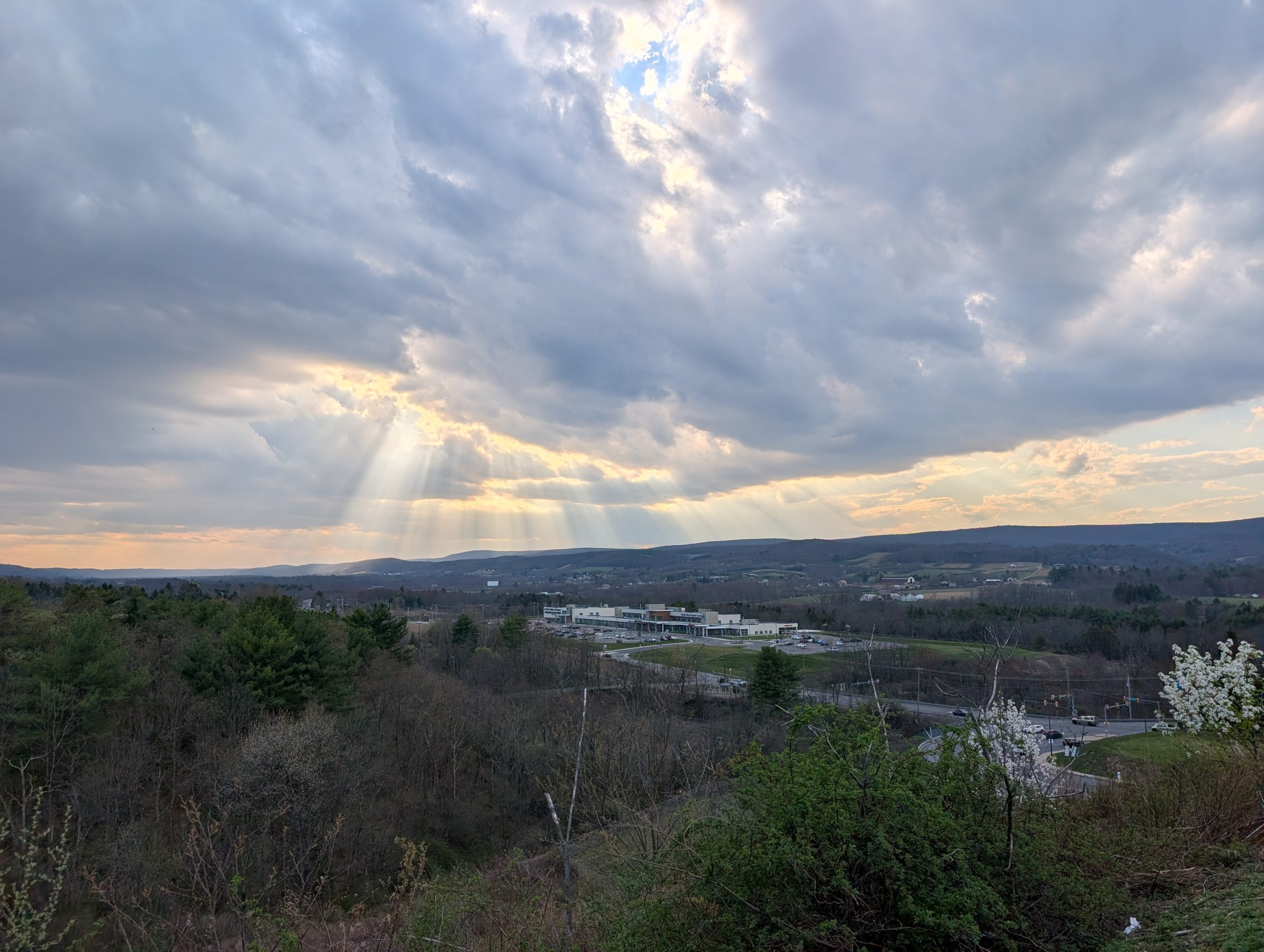
HEADER IMAGE CREDIT: Life in the mountains. Daniel Huang.
ALL OTHER IMAGE CREDIT: Daniel Huang.
The views presented in this post are based on the author’s perspective and experiences. The views and perspectives of the author are not necessarily those of the publisher. Our role as a publisher is to ensure many and varied voices are heard openly and unfiltered and that diverse life experiences find expression in our books, blog posts, and other media. We support our authors fiercely, but we do not always share their opinions or perspectives.