When I first began visiting archives across North America in 2018, I wasn’t searching for the idea that would eventually become a book. I was simply curious.
As a fashion historian, I wanted to familiarize myself with different collections, learn how archives were organized, and understand the many ways institutions preserve our material past. I spent countless hours looking through boxes of garments, photographs, letters, and ephemera. Every archive had its own rhythm and personality, but what fascinated me most wasn’t always the rare or extraordinary object.
It was the ordinary.
A well-worn jacket. A pair of mended jeans. A garment that had clearly lived a life before arriving in an archive collection.
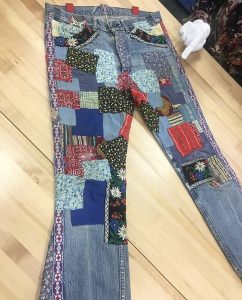
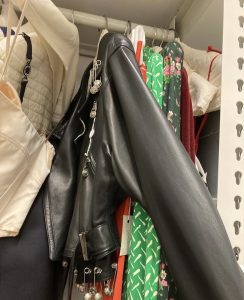
Those encounters led me to ask questions that stayed with me long after I left the research appointments. Why do some objects become valuable enough to preserve while others disappear? What transforms an everyday garment into something worthy of remembering? Is value determined by money, rarity, or provenance…or by the stories we attach to the things we keep?
The more I searched for answers, the more my research shifted away from institutional archives and toward something much closer to home: family archives.
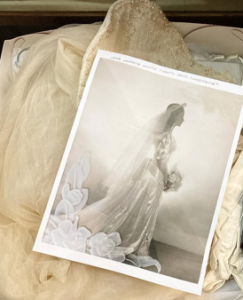
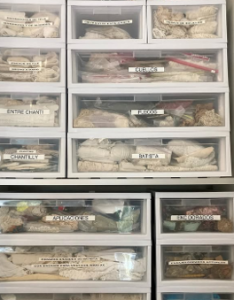
I began thinking about the clothing stored in our closets, the objects passed from one generation to the next, and the everyday belongings that quietly become vessels of memory. A hand-me-down is never just a hand-me-down. A grandmother’s dress is never simply fabric and thread. These objects become living records of love, migration, sacrifice, resilience, celebration, and loss.
They remind us that our ancestors continue to exist in tangible ways through the things they left behind.
Every family archive tells a story, not because every object is historically significant in the traditional sense, but because every object has the potential to preserve lived experience. A passed-down dress carefully hanging in a closet, waiting to be worn again; an inherited blazer chosen for the first day of a new job; or a pair of well-worn boots bearing the marks of countless journeys all become evidence that someone was here. These objects endure as testaments to lives fully lived, to people who loved, struggled, celebrated, persevered, and hoped. That realization transformed my research.
What began as questions about secondhand garments evolved into conversations about memory, identity, family history, and storytelling. The research eventually became a podcast, where I had the privilege of speaking with others about the emotional lives of clothing and objects. Those conversations grew into conference presentations that introduced new perspectives and reminded me that many people carry similar stories through their own wardrobes and family collections.
Slowly, almost without realizing it, those years of research became something much more tangible.
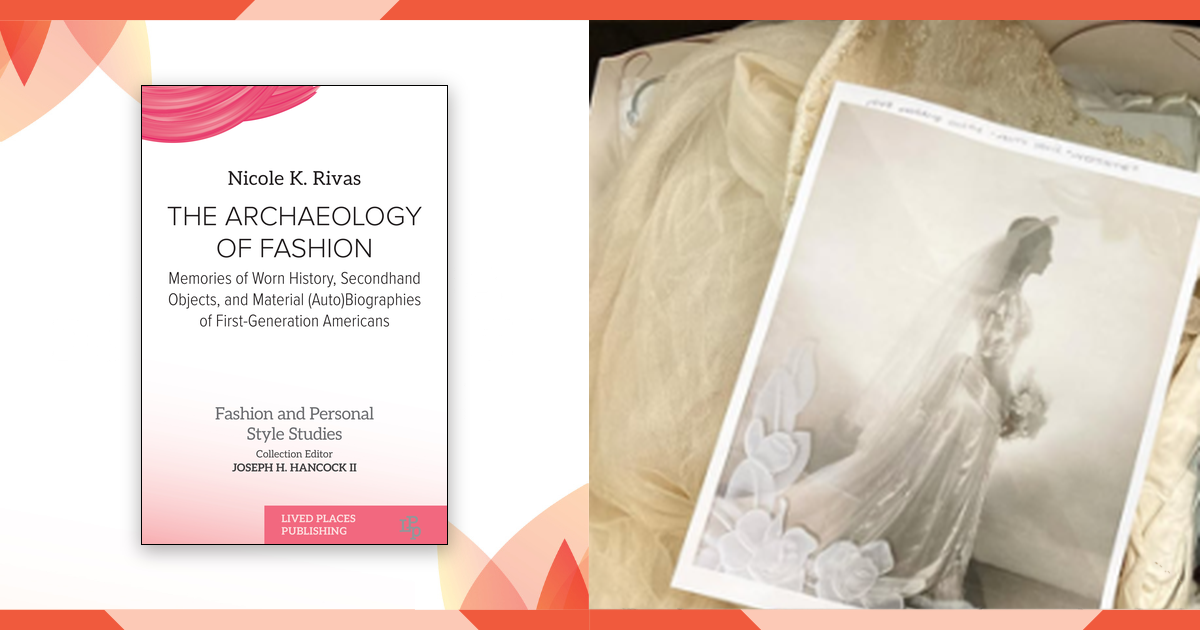
They became The Archaeology of Fashion: Memories of Worn History, Secondhand Objects, and Material (Auto)Biographies of First-Generation Americans.
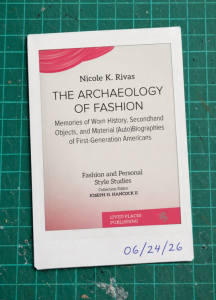
Writing this book became an opportunity to weave together years of archival research, personal reflection, and lived experience. It is both an academic work and a deeply personal one. It asks readers to look beyond clothing as fashion and instead consider garments as witnesses to human lives. They carry traces of the people who wore them and the places they traveled. They connect generations across time, becoming a living thread between those who came before us and those who will come after.
I often think that family archives are less about preserving objects than preserving relationships. Every inherited garment, every carefully stored photograph, every everyday possession passed from one pair of hands to another is an act of remembrance. Together, they create a collective autobiography written not only in words, but in material things.
My hope is that this book encourages readers to pause before dismissing an old sweater, a faded photograph, or a box tucked away in the attic. Perhaps these objects are not simply things waiting to be discarded. Perhaps they are stories waiting to be heard.
If this book sparks new conversations about the memories clothes carry, inspires someone to ask a family member about the history behind an inherited garment, or encourages readers to see their own family archives with fresh eyes, then it has accomplished exactly what I hoped it would.
After all, the stories we inherit are just as important as the ones we choose to tell.
IMAGE CREDIT: Nicole K. Rivas
More about Nicole Rivas’s book published by LPP:
Using inherited garments, how is the choice of clothing significant in the context of the wearer’s surroundings and culture? How does it communicate one’s self-identity as a first-generation American?

We want our books to be available to as many people as possible. If you’d like to purchase an individual copy, please email us and we’ll give you a discount code: