
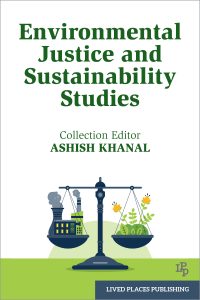
 Environmental Justice and Sustainability Studies explores the impacts of environmental change, sustainability transformations, and social inequalities on individuals, workers, and communities.
The topic is based on the premise that environmental change, urbanisation, economic change, technological change, resource stress, and labour change are not simply political and technical problems; rather, they are also processes through which humans make sense of their world, influencing their lives and relationships with places. This topic also addresses the lived realities, experiences, and unequal conditions of environmental justice and sustainable transitions, particularly for those most vulnerable to environmental and social disparities.
The purpose of this collection is to create course readings that link issues of environmental justice, sustainability, climate change adaptation, labour relations, decent work and just transition frameworks, urban/rural development, migration, circular economy, environmental governance, community resilience, sustainable livelihoods, and innovative modes of socio-economic organisation, including emerging socio-technical systems and sustainability transitions.
Contributions are accepted from established and emerging fields, such as environmental studies, sustainability studies, development studies, urban studies, labour studies, anthropology, geography, sociology, public policy, global health, political ecology, science and technology studies (STS), and other relevant interdisciplinary fields engaged in environmental and sustainability teaching and research.
This topic highlights the ways in which inequality is perpetuated, negotiated, and contested in times of environmental and social transformation, and how a better future can be envisioned and brought into being through research, policy, and practice.
Aligned with the principles of Lived Places Publishing, this collection contains viewpoints that are both person-oriented and place-based, blending theory with lived experience. This collection aims to include perspectives often ignored by mainstream views in environmental and sustainability discourses and to ensure their accessibility for use in an interdisciplinary setting, such as teaching, research, and policy-relevant areas.
As the Collection Editor for Environmental Justice and Sustainability Studies, I will assist authors as needed. Early-career or emerging scholars will receive detailed assistance in developing their arguments, structuring their manuscripts, and navigating the publishing process. For more senior authors, the editing process will involve constructive feedback when needed. This collection also considers book proposals and manuscripts from researchers, professionals, and academics from other disciplines involved in these areas.
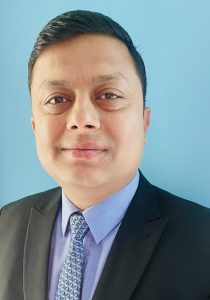 Dr. Ashish Khanal is a sustainability and environmental systems expert from Nepal with extensive experience in solid waste management, circular economy systems, and urban sustainability transitions. He is the CEO of the Global Research Institute and Training Center (GRIT), an interdisciplinary research and training organisation that connects researchers, practitioners, and institutions working on sustainability, environmental governance, and development challenges in the Global South and beyond.
His work focuses on the intersections of environmental governance, livelihood systems, and social equity, with particular attention to how informal and marginalised workers experience environmental and economic change. He holds a PhD in Sustainable Engineering from TERI School of Advanced Studies, India, where his research examined sustainable livelihoods and the lived experiences of formal and informal waste workers in urban systems.
Through GRIT, Dr Khanal has contributed to building collaborative research networks that link scholars, policymakers, and development practitioners across regions, while supporting interdisciplinary dialogue and knowledge exchange on sustainability and circular-economy transitions, environmental justice, and climate-resilient development. He has worked extensively with international organisations, including the World Bank, UNDP, the International Labour Organisation (ILO), and UK Aid, on different projects related to sustainable development, waste management, circular economy transitions, and inclusive urban systems.
As Collection Editor for the academic book collection Environmental Justice and Sustainability Studies, he curates interdisciplinary works that explore how environmental change, sustainability transitions, and structural inequalities are lived, negotiated, and contested across different social, economic, political, and ecological contexts, with a strong emphasis on environmental justice, inclusion, and lived experience.