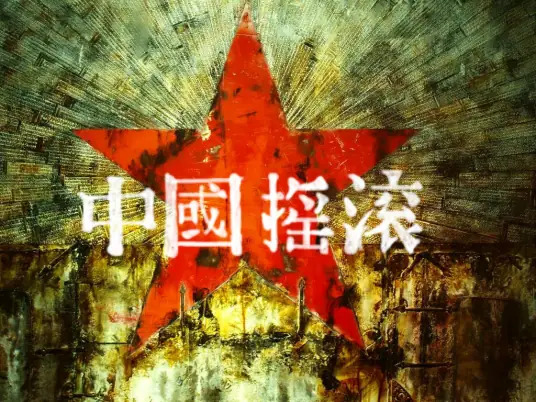
What does ‘freedom’ sound and feel like? For many Chinese youths coming of age in the 1980s and 1990s, it sounded like distorted guitars, rough vocals, and lyrics that dared to express directly what other channels would not. It also felt like dyeing your hair a shocking colour, shouting unfiltered frustrations into a microphone, and losing yourself in a furious collective jump with a hundred other souls at a live show or festival. Then you would drift through the night talking, drinking and refusing to ‘go home and finish your homework’. The term Yaogun 摇滚 (Chinese rock) once embodied all of this: a myth and a symbol of rebellion and personal freedom that still haunts China’s modern cultural memory.
But despite its undeniable presence and social impact over the past three decades, despite its profound transformation within China itself, Chinese rock has remained largely invisible on the global cultural stage. Why?
The journey of Yaogun mirrors China’s drastic transformation since the reform era – from an isolated state after the Cultural Revolution to today’s hyper-consumerist, technology- and market-driven society with the second-largest economy. Initially a raw, defiant expression of the collective yearning for freedom and individuality, Yaogun has gradually become a cool cultural commodity absorbed into China’s market economy in the twenty-first century. In the meantime, my own coming of age with this music in 1990s Kunming and early 2000s Beijing, followed by nearly two decades living in France and the UK, unfolded alongside this transformation. In retrospect, these seemingly disparate narratives —Yaogun’s evolution, China’s social transformation, and my personal cross-cultural journey have become interwoven threads full of interaction and contradiction, yet sharing the same core theme: the ongoing search for agency and identity.
For me, what began as a curiosity about and excitement for the raw energy of rock music extended far beyond rhythm and beats, and the ‘revolution’ and ‘freedom’ myths that Yaogun once embodied for my generation. It became a pathway to understanding the broader currents of Chinese society and its turbulent modern history, and ultimately how these forces had shaped my sense of self and my view of the world. After all, personal narratives are both intimate and public, serving as microcosms of the larger social fabric of which they are a part. They bear witness to the hidden mechanisms that shape our everyday lives and thinking, and which often escape official records. More often than not, they reveal the structural forces and power dynamics that operate in subtle yet profound ways — forces that are often obscured, leading us to believe that our fate is determined solely by our individual will.
For years, I have grappled with fundamental questions: How do music, media, ideologies, conventional knowledge, traditions and the political economy — both local and global — shape our sense of identity? How do they mould our perception of ‘freedom’? Can the freedom we yearn for, whether individually or collectively, ever truly be attained through music, art or defiance? Eventually, Chinese rock became the prism through which these questions crystallised for me. It embodied the ‘revolutionary’ and ‘Enlightenment’ myth that 1980s Chinese intellectuals and early media projected, with its potent blend of promised individual liberation and its considerable impact on my personal life, as well as its entanglement in China’s modern nation-building. For many of my peers, it also represented the myth of ‘personal freedom’ itself.
Yaogun, Nation-Building, and a Myth of ‘Revolution and Freedom’ That Endures
Yaogun emerged in the 1980s, during China’s reopening to global influences after the long shadow of the Cultural Revolution. It was an era of eagerness to redefine what it meant to be Chinese in the context of ‘modernisation’—a term which until then had been largely synonymous with Westernisation. Deng Xiaoping’s vision of ‘capitalism under socialist state control’ allowed for economic liberalisation while ostensibly preserving socialist ideology. In this space of ideological negotiation, Yaogun took root as both cultural import and an attempt to redefine ‘modern’ in uniquely Chinese terms.
The rise of Yaogun provide a means of examining China’s uneasy quest to forge a ‘modern socialist national identity’ — a project that is, paradoxically, dependent on the Western frameworks it seeks to reject. This tension stems from a broader historical turning point: the Opium Wars and subsequent colonial humiliations dismantled imperial China’s isolation and forced a century of defensive modernisation. After 1949, the People’s Republic of China’s (PRC) socialist vision aimed to transcend capitalist models. However, the following decades were filled with fanatical class struggles, internal political conflicts and a stagnant economy. Finally, pervasive capitalist globalisation forced a pragmatic adoption of Western norms, technologies and cultural forms, which have since become ingrained in society. Yaogun emerges from this duality, embodying the allure and anxiety of capitalist modernity, as well as the contradictions of a nation-state negotiating its self-definition on borrowed terms.
In this context, Yaogun was never merely music. It arrived as acculturation—a sonic embodiment of China’s aspirations toward modernity and progress—carrying the mythical promise of ‘revolution and freedom’ associated with 1960s Western rock and exported globally.
However, rock music was not inherently revolutionary. The idea of rock as a vehicle for ‘revolution’ or ‘freedom’ was a myth created by media narratives, marketing campaigns and the momentum of history itself. The contradiction was stark: the very musicians who critiqued the system gained fame and fortune from it. In our late capitalist era, revolution has become a bestseller — mugs and hats bearing red stars or images of Marx or Che Guevara are packaged and sold by the very industries they claim to defy. Yet it was this myth, rather than rock’s complex reality, that China inherited and projected onto Yaogun in the 1980s, echoing the seismic social shifts of ‘reform and opening up’.
For Chinese youth coming of age from the 1980s to the early 2000s, Yaogun offered a completely different worldview: distorted guitars clashing with the serene guqin; individual voices rising above collective choruses; and unconventional spirits rejecting collective and ideological conformity. Yaogun became its own double myth, projecting rock’s ‘revolutionary and countercultural’ aura onto Chinese soil at a time when neoliberal globalisation was penetrating the economy. It symbolised personal freedom and rebellion, offering an escape from collectivism and providing a vision of the ‘free individual’ within a ‘liberal, progressive, modern nation-state’.
However, for those who came of age immersed in these myths in China, the promise of individual freedom was never simple. The myths of revolution, authenticity and liberation collided with the reality of growing up in a society where the very notion of ‘selfhood’ was elusive and undergoing radical redefinition as China transitioned towards a market-driven economy under socialist state surveillance.
What did it mean to find your voice as an individual in a culture that was still navigating the tensions between collective belonging and personal autonomy? And how did the idealised ‘freedom’ promised by Yaogun compare with the lived experience of young people searching for their identity in a rapidly transforming China? These questions—and the contradictions they embodied—propelled many of us outward, seeking the ‘true, authentic self’ and ‘personal freedom’ promised by ‘Enlightened Europe’ and ‘Free Britain’, ideals deeply embedded in the intellectuals’ discussions at the time, translated cultural works from Europe, and the rock myth we had absorbed.
Coming of Age with Yaogun: On Selfhood in China, and the Myth of Individual Freedom
Growing up in post-reform China meant navigating a worldview shaped by competing ideological influences. Traditional Confucian and patriarchal values instilled a deep sense of hierarchy, duty and social order. Meanwhile, the socialist, revolutionary legacy emphasised collectivism, historical struggle and the vision of a strong, self-sufficient nation. At the same time, the myth of Western civilisation was presented as a beacon of progress and human advancement through media representations, translated intellectual works and rock music. For many, the rock myth embodied an idealised vision of resistance, individuality, and artistic authenticity — values that stood in stark contrast to the familiar ideological structures. These competing influences shaped a generation’s understanding of identity, culture, and belonging.
But what does it mean to be ‘modern Chinese’ on a personal level? Speaking English or multiple languages? Wearing designer clothes? Using diverse personal pronouns? Learning modern psychology and ‘symbolically killing one’s parents’? Practicing ‘self-love’? Being able to speak as an ‘independent, critical citizen’? What exactly does ‘modern’ mean? And why has it been such a crucial theme for individuals and the nation of China for a century, especially since the 1980s? Is it ultimately about ‘self-determination and self-esteem’—whether for an individual or for a new nation breaking with its feudal history and seeking to represent its people as an entity?
To forge an authentic identity in ‘modernity’, both Yaogun and those who grew up with it must navigate a paradox: relying on Western frameworks (terms, ideologies, metrics) even while resisting their hegemony. This duality reflects broader cultural phenomena in post-reform China—literature, film, art—that borrow from capitalist modernity while critiquing its encroachment. The rebellion is existential, rejecting both Western cultural hegemony and the authoritarian pragmatism that enables it. Yaogun therefore becomes both mirror and microcosm: it reflects China’s struggle to commodify ‘progress’ without undermining its socialist exceptionalism, just as it exposes the personal turmoil of a generation raised between collectivist dogma and neoliberal individualism. The ‘personal freedom’ promised by rock, like the ‘modernity’ promised by Westernisation, has been revealed to be an illusion: a framework imposed rather than discovered; a myth that speaks more to who we thought we should become than who we are.
Navigating different cultural and social landscapes — from China to France to the UK — has brought me both self-discovery and disillusionment. It has also challenged the myths I once held about Western societies and civilisations. Many Chinese people were attracted to the West as the epitome of progress, influenced by systematic translations of European philosophical and scholarly works, cultural works broadcast through major media channels, and rock myths symbolising freedom and authenticity. However, living deeply in different contexts has revealed to me the complexities, contradictions and limitations within these narratives. The ‘freedom’ that we yearn for, whether through music, migration or defiance, is never as simple or liberating as the myths suggest. This forces us to reassess not only Western/neoliberal modernity and the myth of ‘progress’, but also our own cultural backgrounds, and ultimately the very notions of ‘personal identity’ and ‘freedom’ itself.
The Co-option of Dissent, Identity in Motion, and the Modern Struggle for Authentic Liberation
Why does Chinese rock remain largely invisible on the global cultural landscape? The answer lies in the double constraints faced by many cultural forms located on the ‘periphery’ of the global cultural map. Rock music is viewed with suspicion by Chinese authorities because it represents rebellious and individualistic voices. These voices conflict with both traditional emphases on collective unity and conformity under the socialist ideology. Externally, the genre is under the pressure of neoliberal capitalist logic, which seeks to commodify diverse cultural productions and convert them into marketable global products, often stripping away their subversive power in the process. Yaogun exists in this precarious space, caught between state control and market forces, between authentic expression and commercial appropriation.
This is not a dilemma that is unique to Chinese rock. The evolution of Yaogun reveals a deeper contradiction within neoliberal globalisation – the dominant ideology of our age. The myth of ‘freedom’, once embodied by the revolutionary image of rock, mirrors the core message of neoliberalism itself: both are sold through seductive promises of ‘choice’, ‘globalisation’ and ‘freedom’, yet paradoxically reinforce the very inequalities and barriers they claim to overcome. Likewise, the predicament of Chinese rock — using instruments, languages and artistic tools ‘borrowed’ from the West to express its own authenticity — echoes China’s national journey toward becoming a ‘prosperous socialist state’ while operating within a market-driven economy. Dissent itself is co-opted: rebellion is packaged and sold, losing its power to transform and leaving only the aesthetic of resistance while the structures of domination remain intact.
Why Chinese Rock Matters Now
China’s struggle to reconcile its historical and cultural heritage with a neoliberal, capitalist narrative of modernity reflects a global issue we all face. Today, a new technological revolution driven by artificial intelligence, biotechnology, and digital integration threatens to dissolve the boundaries between human and machine, self and algorithm. Like Chinese rock, which oscillated between rebellion and assimilation while navigating both internal and external obstructions, we must confront the dual potential of technological progress: will it fracture identities further, or forge new paradigms for the very concept of identity itself?
At the same time, we face challenges from both our individual internal egos and external ‘collective egos’—the nation-states within the neoliberal framework that thrive on distinction and differentiation: East and West, socialism and capitalism, individuality and collectivity, ‘us’ and ‘them’. These binaries, weaponized through ethno-nationalism, racism, sexism, and territorialism, fuel the very conflicts they claim to resolve. Through this binary thinking, we remain trapped between opposites, losing sight of the spaces in between.
The history of Chinese rock—a peripheral art form navigating both internal state oppression and Western cultural imperialism—reflects the broader tensions individuals and nation-states face today. The evolution of subversive expressions across cultural movements, from rock to punk to underground scenes, carries the risk of replicating the very hierarchies and power structures they aim to dismantle.
In a world where markets and media turn rebellion into ephemeral reels and products, where AI threatens to redefine consciousness itself, these questions have never been more urgent: What does freedom truly mean? How do we transcend the boundaries and divisions, both external and internal, that fragment us? Can we find hope for a future grounded not in rigid categories but in the liminal spaces between them—where ‘home’ becomes neither a fixed geographic place nor a conceptual ‘heritage’, but a practice of fluid belonging?
Rather than clinging to identities defined by nation, ethnicity, gender, class, territory or ideology, the answer may lie in embracing the ’empty nature’ of identity as described in Buddhist and Taoist philosophy and dwelling in the in-between. Embrace the ’empty nature’ of identity is not a void or absence of agency; rather, it is a state where the separate, isolated ‘self’ gives space for all histories, heritages, influences and states to be fully inhabited by us while retaining the ability to let them go – all under the umbrella called ‘human spice’. In this sense, the isolated ‘self’ dissolves and recombines like diverse traditions flowing towards a vast ocean: rooted in particular contexts, yet ever-flowing and opening up to new possibilities. Ultimately, it is perhaps about refusing to turn difference into rigid fixation and transform ‘identity’ into an ideological weapon; it is perhaps about rethinking belonging and feeling at home nowhere and everywhere at once.
How has the cultural phenomenon of Chinese rock music shaped and influenced Chinese society? What does Chinese rock reveal about global power structures and their interconnectedness?
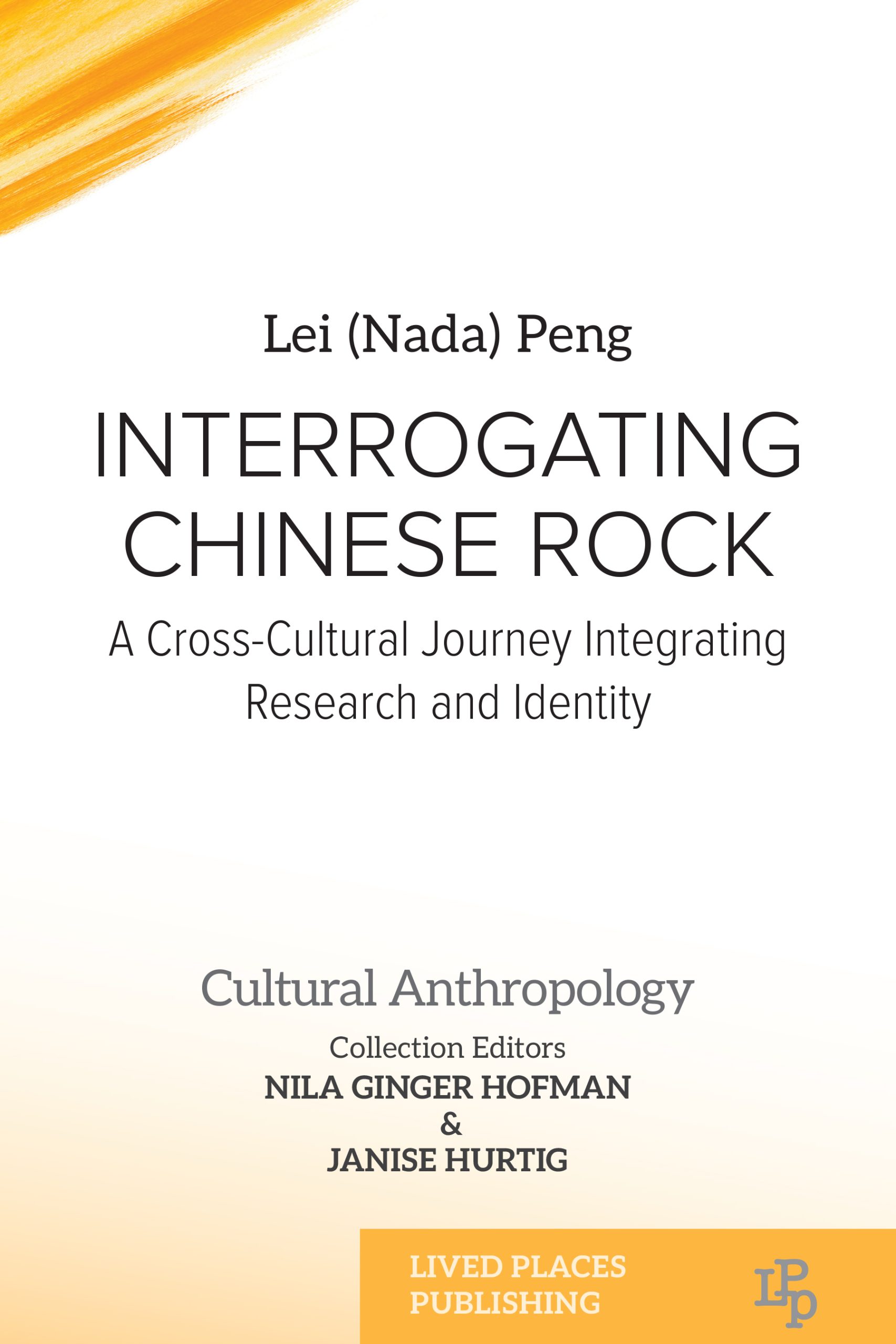
Interrogating Chinese Rock traces these parallel journeys—of a music genre, a nation, and a self in motion—through autoethnographic research spanning two decades across China, France, and the United Kingdom. Bridging scholarly analysis with lived experience of the author Lei (Nada) Peng, it explores how rock music became a mirror for China’s search for modernity and how that search reflects our universal struggle for identity and belonging in an age of neoliberal globalization, trans-cultural movements, and technological transformation. It also sketches the trans-cultural integration of Lei (Nada) Peng’s identity, which unfolded alongside the inquiry into Chinese rock.
Addressing issues of gender, race, class, consumerism, patriarchy, and cultural hegemony, this book is essential reading for students in Cultural Anthropology, Transcultural Studies, Sociology of Music, China Studies, Asian Studies, Women’s Studies, and related social sciences.
We want our books to be available to as many people as possible. If you’d like to purchase an individual copy, please email us and we’ll give you a discount code:
IMAGE CREDITS:
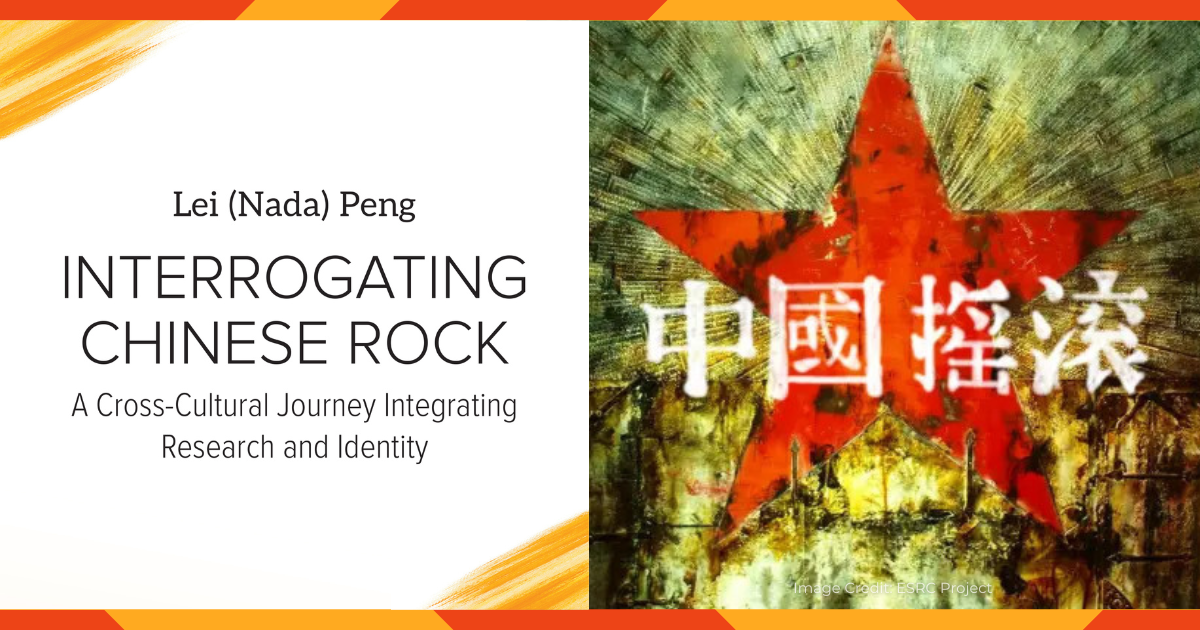
- ‘Chinese rock in characters.’ Image retrieved from the entry “Chinese Rock” (中国摇滚) on Baidu Baike, the Chinese-language collaborative online encyclopaedia. Accessed via: https://shorturl.at/SwtSJ.
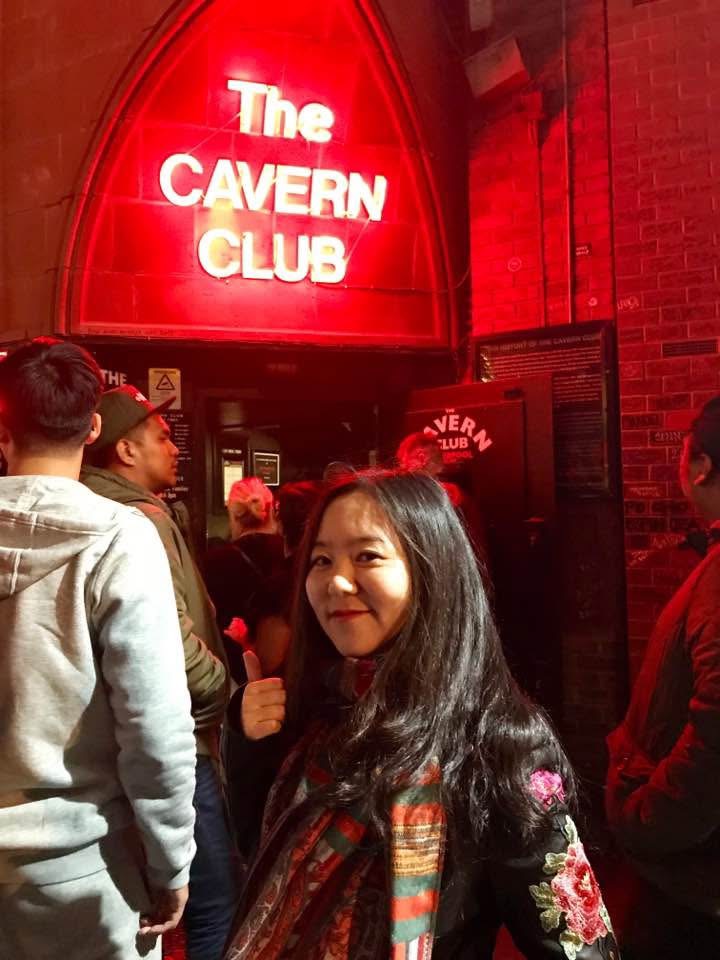
- Lei (Nada) Peng stands in front of the Cavern Club, the iconic Liverpool venue for rock music. Credit: Lei (Nada) Peng
The views presented in this post are based on the author’s perspective and experiences. The views and perspectives of the author are not necessarily those of the publisher. Our role as a publisher is to ensure many and varied voices are heard openly and unfiltered and that diverse life experiences find expression in our books, blog posts, and other media. We support our authors fiercely, but we do not always share their opinions or perspectives.