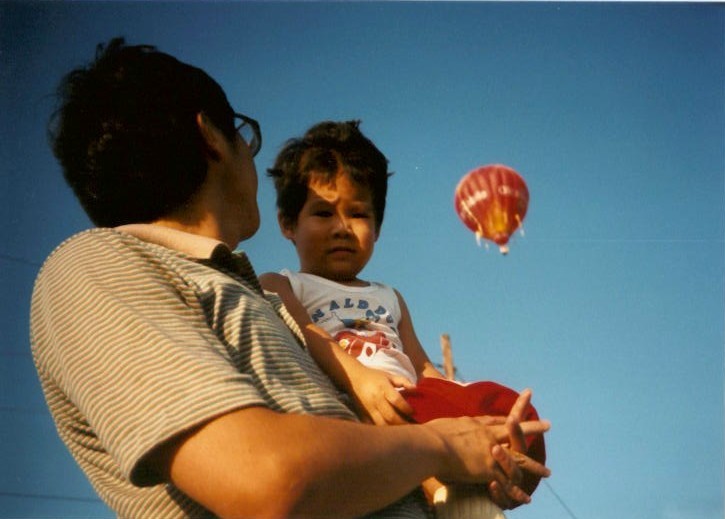
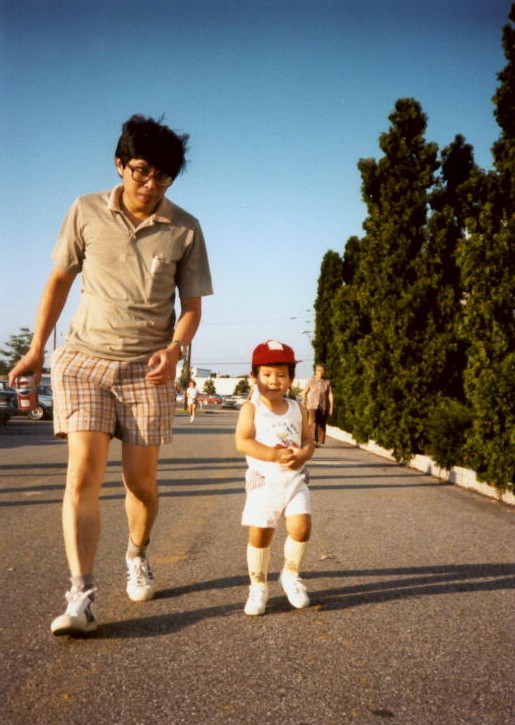
“Mommy, what is tenure?” is one of my first memories growing up because my father was often anxious and absent since he was on the track to a full professorship in the 1980s. In those days with shared computer workstations in a central department lab, he was often surrounded by piles of papers and books, writing an article or planning for the next class. He bore more than a slight resemblance to the dad from Miyazaki’s “My Neighbor Totoro” right down to the sweater vest and thick rimmed glasses.
My mother explained that this tenure thing would let my father write whatever he wanted and read whatever he wanted. I had a public library card and was the proudest five year old who could read whatever I wanted at the local library so I didn’t quite understand this tenure thing that was so important to adults! In fact, the public library had gifted us tote bags (usually cat themed) because of all the books I borrowed. I gave dad one of the cat tote bags because maybe it’d help with his tenure “homework.”
No End to Curiosity
Years later when I was at the Rutgers University library school, my father had not only achieved a full professorship with tenure but had also served a record-breaking near decade as a department chair. When I graduated, he reminded me of his struggling days and that my job if I went into university libraries is to never forget to support each and every professor of every rank especially if they were a POP (Professor of Practice). “Dad, what’s a POP?” was my understandable question.
In 2026, after two history degrees and nearly two decades in university libraries, a librarian ends up learning that there are all sorts of professors. When my wife was in medical school, I dutifully typed into Google “Is a MD clinical professor tenure track?” (probably should have just asked my father). We all hear “publish or perish” but rarely do non-faculty see the time, effort, and anxiety inherent in planning for a class and designing a curriculum, even if the instructor is on a tenure track.
I spent years of my life designing and perfecting several priority book delivery services at Lehigh University and the greatest compliment I ever received from a professor was “here at Lehigh, you’ve given us assurance that any faculty can read what they want when they want.” In the process of learning what made such a service function optimally, I heard so many other stories of anxiety and fear from faculty that their needs weren’t heard or seen and perhaps nobody understood their struggles.
Why Lived Places Publishing?
When I joined Lived Places Publishing in 2025, I did so at my physician wife’s reminder that my father’s story was what drove me to serve and help in my role as a librarian (and that “Dr.” in front of a name doesn’t make anyone immune to stress). I joined LPP to serve as an advocate for all professors and instructors who are working hard to make a difference through their teaching and research. I figure a lot of faculty may also have a kid asking them why their parent’s job is so complex and time-consuming.
To that end, I know the books published by Lived Places are an easy win for busy professors who have to be absolutely discerning in an often complex and contentious teaching environment. I want you to know that you can rest assured that I’ve evaluated both LPP’s print and eBooks and they have passed all my crucial librarian metrics for ease of usage.
A Call to Co-intentional Learning
I am a firm believer in co-intentional teaching where all parties involved mutually share and learn with one another. I’m sure many professors have a few things about their lived experiences they wish librarians knew. I’m even more sure that publishers wish they knew those insights from the librarians who are in the know! My learning about how faculty operate is a continually developing and changing goal in my career and I hope that you will teach me something new about what you experience in my new role with Lived Places Publishing. Here’s a few ways I can help:
If you are seeking a new book that tells the story of unique lived experiences, I encourage you to read any of these open access titles that LPP makes available:
https://livedplacespublishing.com/open-access/
If those books resonate with you, I encourage you to ask your school’s library to purchase one of the top books from LPP’s Intersections collection:
https://livedplacespublishing.com/librarians/
LPP is a publisher that believes in different modalities of instruction and they actively encourage faculty to invite a LPP author as a guest speaker to their classroom:
https://livedplacespublishing.com/page/guest
My role is to handle any faculty-related questions or concerns and translate those thoughts into actions with LPP. If you run into any roadblocks with getting access to LPP resources or want to know more about integrating LPP books into your classroom, we’re here to listen and I will be your advocate. We actively want to understand your story and consider how we can support your university teaching mission.
Cordially,
Daniel
HEADER IMAGE CREDIT: Dreams Take Flight. Courtesy of the Huang Family Collection.
INLINE IMAGE CREDIT: Keeping Pace with Dad. Photo courtesy of the Huang Family Collection.
The views presented in this post are based on the author’s perspective and experiences. The views and perspectives of the author are not necessarily those of the publisher. Our role as a publisher is to ensure many and varied voices are heard openly and unfiltered and that diverse life experiences find expression in our books, blog posts, and other media. We support our authors fiercely, but we do not always share their opinions or perspectives.