
Introduction and Historical Context
Individuals with severe mental illness (SMI) have been barred from “polite” society throughout history. State and private residential psychiatric institutions sprang up in the late 18th century in the US and proliferated into the mid-19th century. A century later, US mental institutions numbered more than 300, about two-thirds of which were public facilities. Total national census in the 1960s peaked at an estimated half a million institutionalized patients.

Around this time, a crusade to eliminate long-term residential facilities arose, based on reports of abuse in many of them, the advent of new medications, and proposals for community-based care models. Funding cuts led to consolidations and closures throughout the 1950s and 1960s. Where did all those patients go?
One Family: One Story
My mother was diagnosed with schizophrenia when I was an infant. In 1953, she was judicially committed—against her will—to a psychiatric hospital four hours from our family’s home. Thirteen years later, she died in Central Louisiana State Hospital, where she was one of more than 3000 patients.
Electroconvulsive therapy (ECT) and barbiturates did little more than provide a few days of respite from the most bizarre symptoms. The introduction of Thorazine in the early 1950s was hailed as a “cure” for mental illness and many patients were sent home. I don’t know if my mother received the drug, but she returned to our home in 1958, presumably stable. The following months were a tumultuous time for our family. Less than a year later, Mother was escorted back to the hospital by police after one final dramatic and traumatizing scene.
Family Stories are Important to Mental Health Policy
After most residential psychiatric facilities closed or transitioned to forensic hospitals for the criminally insane in the late twentieth century, there were literally thousands of families across the US like mine: unaware and unprepared to care for a family member who was very ill. Most families had no skills with which to support them and didn’t understand their loved ones’ diagnoses. Fortunately for some, newer psychotropic drugs effectively controlled symptoms. But not every drug worked for every patient. Others worked for a time and then mysteriously stopped. With fewer institutions available, there were scarce options for those patients who did not respond to drugs but had committed no crimes.
For the recently released book, Advocating for Mentally Ill Family Members: Lessons for Mental Health Policymakers, I interviewed members of 12 families whose child, parent, sibling, or partner was diagnosed with a SMI. Many of the stories are heartbreaking. Families can be devastated when relatives they love cannot function independently. Too many ill family members disappear, become homeless, or refuse treatment. Some can become violent.
It’s important for policymakers to hear individual family stories so they understand the human toll that SMI can inflict on families. It’s also important to integrate family members into their patients’ treatment when possible. For many patients, these are the most reliable support systems they have. Professionals are also the most effective advocates for community resources that support the whole family.
Challenges of Community-Based Care
Creating effective community-based care systems is an admirable goal but creating them is expensive and consists of many elements that must work cooperatively: facilities, access to therapeutic drugs, mental health education, connected care providers, crisis intervention, support groups, and much more. Many communities do not have the resources, facilities, or staff to develop successful programs.
I interviewed a woman who had a faither with schizophrenia and a stepfather with schizoaffective disorder. She is active in her local National Association for Mental Illness (NAMI) chapter and is well-educated about mental illness. She suggested that a critical piece of community-based care that is often missing is wraparound services. Care providers need to coordinate assistance, she told me, and they need to proactively connect with all family members.
In Texas, where I live, in 2023, 170 of 254 counties (67%) had no licensed psychiatrists and 143 (56%) had no licensed psychologists. Most of the state is designated as a mental health shortage area. State legislators exacerbate the situation by failing to prioritize mental health services. Many clinics and services here and across the nation instead depend on piecemeal grants and local collaborations to cover needs. As is true in all states, funding mental health resources adequately is a matter of political will.
The Criminalization of Mental Illness
Interactions with law enforcement are common among those with SMI. Almost all the family members I interviewed related stories of their loved ones’ brushes with the law. In most cases, adequate treatment options in their communities would have prevented police encounters.
The lack of sufficient community mental health supports often drives those with mental illness to homelessness. Many communities respond by tearing down homeless individuals’ improvised shelters, often arresting those who resist. Some cities find more creative ways to criminalize homeless populations. They pass laws that remove public benches, set aggressive park sprinkler schedules, or disallow sitting or lying on city sidewalks. Similarly, city ordinances target broadly interpreted acts of trespassing, loitering, or disorderly conduct. All these statutes lead to more arrests.
For example, a sister I interviewed said her brother caused a disturbance in a bank by attempting to withdraw money he didn’t have. A mother’s son disappeared on a trek across the country, without his family’s knowledge and was eventually committed by police to a psychiatric hospital in another state. The family has never received a full account of what transpired. Another mother told me she and her husband lived in constant fear that their son, who had schizophrenia and had a legally obtained gun, would kill himself or someone else because of his drug and alcohol abuse. Several incidents led to jail time, but not to mental health intervention. One father even asked police to arrest his son to “teach him a lesson” about his potentially dangerous behavior. It didn’t.
Prevalence of Mental Illness in Prisons
According to NAMI, approximately 40% of those who are currently incarcerated have a history of mental illness (compared to 23% nationally). This estimate is likely low, because many prisoners do not feel safe reporting symptoms of mental illness. Even those inmates who are known to have a mental illness receive little treatment. For many, poorly treated mental illness contributed to their law enforcement interaction and subsequent arrest in the first place.
One mom said that more than a decade ago her son disappeared without a trace and is now presumed dead. Despite the heartache of not knowing what happened to him, she suggested that he was better off dead than in prison in the shape he was in. She and her husband had begged law enforcement on several occasions to provide mental health assessment or treatment while their son was in jail. None was ever provided.
In their 2014 report, Incarceration Nation, the American Psychological Association (APA) insists that prisoners have a right to adequate treatment for mental illness as part of basic medical care. The APA also objects to use of solitary confinement as a remedy for undesirable behavior, as that will likely worsen their illness. Will prison operators, many of whom are for-profit, implement suggestions for improving mental health care for inmates? I’m not optimistic.
D.J. Jaffee, in his 2017 book Insane Consequences: How the Mental Health Industry Fails the Mentally Ill, asserts that inmates who are mentally ill often become victims, preyed upon by other inmates because of odd behaviors or inability to defend themselves. He adds that suicide rates are higher among inmates overall than any other group; NAMI estimates that 46% of suicide victims have known mental health conditions. Jaffee suggests that many mentally ill prisoners would be better served by creating a national system of managed psychiatric parole and probation facilities which could provide mental health treatment in a secure environment. A few such facilities exist, but they are not widespread.

Conclusions
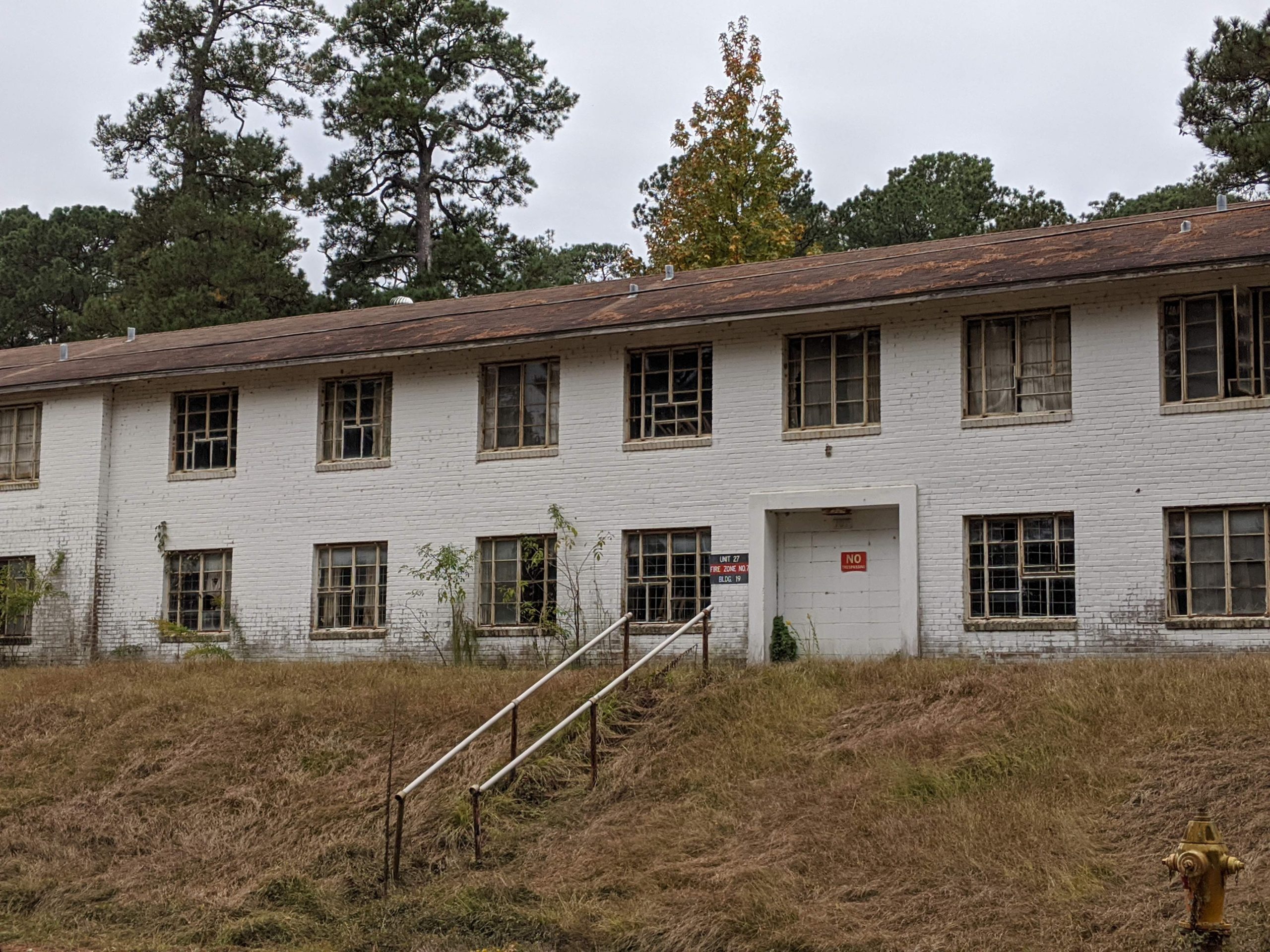
In 2019, I revisited Central Louisiana State Hospital for the first time in more than 50 years. The former 406-acre campus was deserted, aside from a small day clinic. A guard cautioned us not to call attention to ourselves, but we never saw anyone else. Residence halls were dilapidated and overgrown. Despite the eerie stillness, there was serene beauty in the rolling grassy hills, walking trails, and towering pine trees. I imagine residents like my mother walking the trails to their work assignments in the gardens, the woodshop, or the now historic dairy barn that once employed patients. For some, it might have been a more nurturing environment than their home communities. I don’t doubt there were abuses by staff or vicious infighting among patients. However, I wonder if we made a better bargain with the mentally ill by turning them out for their families to tend, when we provide little support for either the family or their loved one. Many will eventually find their way to prison, behind a different set of bars, where there is little incentive to treat. Have we simply traded one form of confinement for another, even more cruel one?
How do families cope when a loved one’s mental illness collides with scarce community resources and societal stigma?
Advocating for Mentally Ill Family Members draws on personal experience and powerful interviews to shed light on the hidden struggles of families living with mental illness. With honesty and compassion, the book reveals how erratic behaviors strain relationships, how stigma silences families, and how advocacy becomes a vital yet exhausting necessity when navigating mental health systems.
Through stories of parents, children, partners, and siblings, Janice Airhart illustrates both the challenges and resilience of families who fight for the care and dignity of their loved ones. By capturing the lived realities of mental illness across different diagnoses, this book underscores the urgent need for stronger community support, better policies, and more compassionate systems of care.
Ideal for students and practitioners in psychology, psychiatric medicine, psychiatric nursing, community mental health, and disability studies, as well as families, caregivers, and advocates seeking understanding and guidance.
We want our books to be available to as many people as possible. If you’d like to purchase an individual copy, please email us and we’ll give you a discount code:
IMAGE CREDITS:
- Barred Windows. Credit: Juan Pablo Jou Valencia via Unsplash
- An Abandoned Patient Residence Hall at Central Louisiana State Hospital, 2019. Credit: Janice Airhart
- Original Administration Building at Central Louisiana State Hospital, 2019. Credit: Janice Airhart