
“When democratic institutions fail to protect people, all that is left in their defense is solidarity among the people themselves.” – Noah Bullock, Executive Director, Cristosal
In 2019, Nayib Armando Bukele Ortez campaigned for the presidency of El Salvador, promising to fight corruption. But then, after a “state of exception” was declared in March 2022, Bukele ordered mass incarceration of alleged gang members, including juveniles. According to ProPublica and other sources, he then allegedly offered secret deals to gang leaders that included advantages while in prison and other concessions in return for slowing the murder rate in El Salvador and supporting Bukele’s political party in local elections.
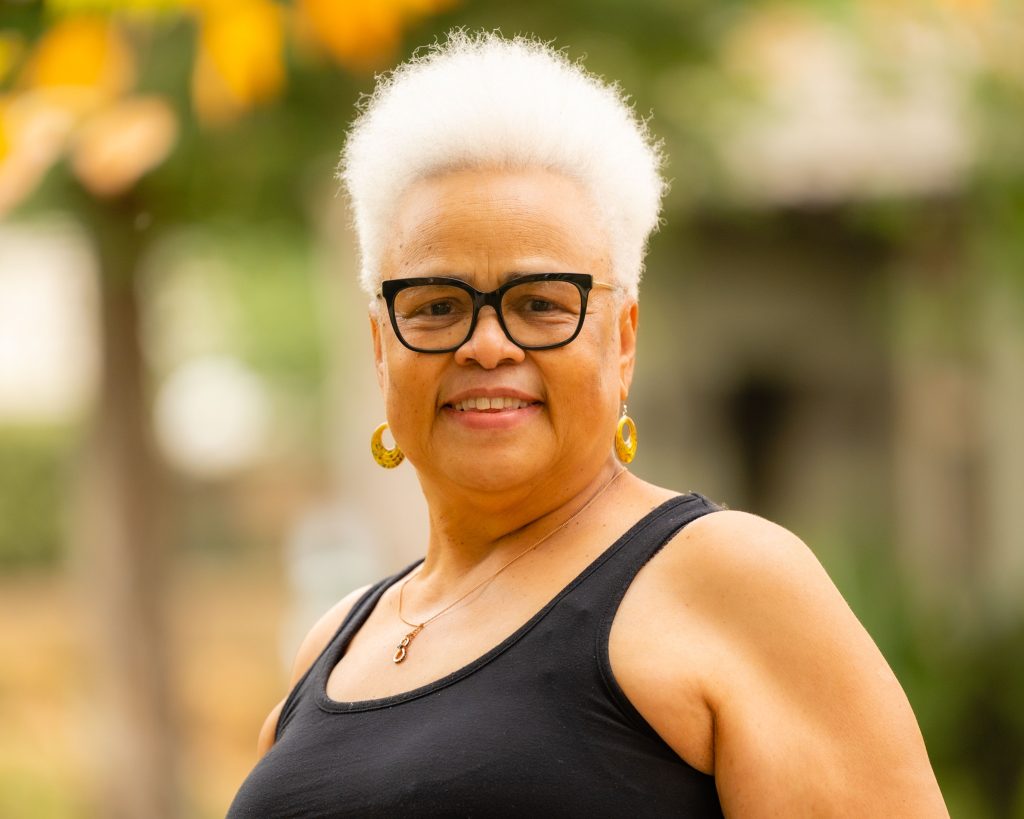
While the murder rate has fallen in the ensuing years, bringing Bukele widespread popularity, the cost in human rights violations has been staggering. El Salvador now has the highest incarceration rate on earth, with more than 100,000 sent to prison, many with little or no evidence. Systematic torture and hundreds of deaths in detention have been documented by Cristosal, El Salvador’s leading human rights organization, and reported by the independent newspaper El Faro. In retaliation, the regime forced El Faro to leave El Salvador last summer and Cristosal also had to flee after their Chief Legal Officer, Ruth López, was arbitrarily arrested in May and sentenced to six months of pretrial detention. Cristosal now operates in exile in Guatemala and Honduras.

On July 1, 2025, Amnesty International declared Ruth López to be a prisoner of conscience, as she had been detained solely for the peaceful exercise of her rights, and called for her immediate release. Nevertheless on July 4 Ruth was transferred from a police holding cell to the Izalco prison and placed in incommunicado detention.
On September 22, the Inter-American Commission on Human Rights (IACHR) granted precautionary measures in favor of Ruth, ordering the State to adopt all necessary steps to protect her rights to life, personal integrity, and health; ensure detention conditions consistent with international standards; immediately end prolonged incommunicado detention; and guarantee regular contact with her family and lawyers. As of the time of writing of this article, the government has made public no steps to implement the IACHR orders.
In December, Ruth’s detention order was extended for another six months with no trial date announced and no visitation permitted. Cristosal has good reason to fear that such extensions will be renewed indefinitely, as other Salvadoran prisoners have languished in pretrial detention for up to four years.
As western region director of Amnesty International USA in the 1980s, I worked on many cases of forced disappearance in El Salvador. A chapter of my recently published memoir, The Leadership of Women: more stories of solidarity and struggle in the human rights movement, features a profile of Neris Gonzales, a courageous survivor of forced disappearance, torture and rape at the hands of Salvadoran national guard soldiers in 1979. Neris survived the ordeal, fled the country, was eventually granted asylum in the US and after a long and personally painful struggle won a landmark civil case against her tormentors in a US court in 2002. Her story is inspiring, but as Cristosal has documented, arbitrary arrest and torture are once again systematic in Bukele’s El Salvador. See more on this point at: https://www.amnesty.org/en/documents/amr29/7423/2023/en/)
When I heard of the arrest of Ruth López, I got in touch with Cristosal. At their request, I’ve reached out to human rights colleagues and public officials to encourage statements of concern and solidarity. Some who know Ruth’s case have gone on record, including former US Ambassador-at-large for Global Criminal Justice Beth Van Schaack, who wrote, “Ruth López, an award-winning constitutional lawyer, has devoted her life to defending the fundamental rights of all Salvadorans and combating corruption. Her detention by President Bukele in clear retaliation for her work with Cristosal is indicative of the erosion of human rights and the rule of law in El Salvador.”
Kerry Kennedy sent this message: “I had the pleasure of meeting Ruth López in April 2025 when I visited El Salvador. I was deeply impressed by her fearless commitment to the rule of law and democracy. Her detention is a stark example of how authoritarians criminalize courage and punish those who defend human rights. I call for her immediate and unconditional release, an end to the persecution of human rights defenders, and urgent international attention to restore the rule of law in El Salvador.”
In a recent podcast interview, Cristosal Executive Director Noah Bullock described some of the steps that led up to Ruth’s arrest and the organization’s flight into exile. Of particular significance for people in the United States who support the cause of human rights, USAID funding of Cristosal was abruptly cut off last spring by the Trump administration, indicating that exposing and denouncing corruption and human rights abuses no longer align with US priorities. The deal made between Trump and Bukele to deport Venezuelans to El Salvador’s notorious prisons, including wrongfully arrested Kilmar Abrego Garcia and many others who had active asylum appeals, is viewed by Noah as a kind of “parable” revealing how US and Salvadoran policies and practices mirror each other, including the use of staged “optics” to normalize repression. For more on this concern, see: https://www.amnesty.org/en/documents/amr01/9259/2025/en/
One such parallel is that in both countries the loudly proclaimed “security narrative” quickly gave way to the underlying “repression narrative.” Just as arbitrary arrests and killings of peaceful protesters in Minneapolis by ICE and Border Patrol agents have stripped bare the pretext of immigration enforcement here, the imprisonment of Ruth López exposes the suppression of lawful dissent through misapplication of extraordinary powers Bukele claims he needs to fight violent crime.
The recent arrest of journalists Don Lemon and Georgia Fort for covering a protest in a Minnesota church is just one example of Trump’s assault on freedom of the press, the US version of Bukele’s ouster of El Faro. The Trump administration’s defense of the killings of Renee Good and Alex Pretti, their shocking efforts to smear the victims and their claims that federal agents have “absolute immunity,” though not based in law, can only encourage further abuses of power, while in El Salvador Bukele has instituted policies to deny fundamental rights to anyone arrested, including the right to know the charges against them.
But as Noah underscored in his interview, the parallels are actually deeper. Both Trump and Bukele rose to power by identifying populations they claimed had no legal rights and should be expunged from society – migrants “suspected of crimes” here and alleged gang members in El Salvador. Once this perspective was accepted, mass deportations without due process of migrants who have no criminal record in the US, and incarceration and ill treatment of people who have committed no crimes in El Salvador, became virtually inevitable. What both presidents claimed were efforts to rid society of violent criminals have revealed themselves to be instruments of broader repression and consolidation of unchecked power.
The imprisonment of Ruth López should alarm everyone who believes in human rights and the rule of law. We in the United States should recognize the complicity of our own government in the rise of repression in El Salvador and speak out for Ruth, and act in solidarity with people like Renee Good, Alex Pretti, 5-year old Liam Conejo Ramos and countless others who have been cruelly harmed or who find themselves in the cross hairs of the regime now in power in our country. The admonition of German pastor Martin Niemöller, though revisited many times, has never seemed timelier in my lifetime:
First they came for the socialists, and I did not speak out—because I was not a socialist. Then they came for the trade unionists, and I did not speak out—because I was not a trade unionist. Then they came for the Jews, and I did not speak out—because I was not a Jew. Then they came for me—and there was no one left to speak for me.
I believe that in time, accountability is coming for these human rights violators, as it did for the Salvadoran generals whose soldiers abducted and tortured Neris Gonzales. It took many years of legal struggle and determined activism, but the generals were eventually found to be responsible for the crimes committed against Neris by their soldiers, forced to pay reparations and deported back to El Salvador, where one went to prison for murder. These human rights violators were prevented from finding safe haven in the US because Neris and other survivors never gave up seeking justice, and did not fight alone. To prevent others from being brought to justice, El Salvador passed laws providing amnesty for perpetrators, a crushing blow to the struggle against impunity that may have contributed to the return of an authoritarian government there. Trump’s rampant abuse of presidential pardons can have the same effect here. We must stand together now, for Ruth, for the rule of law, and for each other.
Ruth’s pretrial detention order is set to expire in June. Activism now is urgently needed to demand her unconditional release and prevent another extension. Let your voice be heard!
To see how you can help, contact Tarrah Palm, Director of Resource Development for Cristosal at: tarrah.palm@cristosal.org.
—David Hinkley, former chairperson of Amnesty International USA
David Hinkley has two books published by LPP:
What can we learn from the women whose leadership has shaped human rights struggles across the globe?
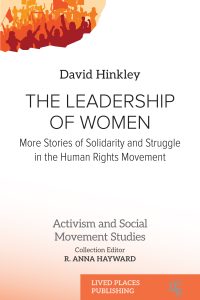 The Leadership of Women is a powerful memoir by David Hinkley that celebrates the remarkable women who inspired his work beyond Amnesty International, spotlighting their groundbreaking contributions to movements for justice. Through vivid stories of collaboration, resilience, and innovation, Hinkley honors these champions while offering lessons for activists today.
This book is both a tribute and a call to action—an invitation to join ongoing struggles for the rights of women, refugees, people in poverty, and victims of abuse worldwide. The Leadership of Women is ideal for students, scholars, and activists seeking to understand and advance human rights in the 21st century.
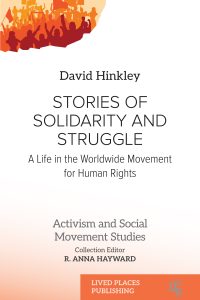 Drawing on personal experience and that of towering human rights figures, such as South Korea’s Kim Dae Jung and Sudan’s Mahmoud Mohamed Taha, author David Hinkley takes us on a journey of solidarity and struggle in the cause of human rights. Stories of Solidarity and Struggle offers a unique insider look at the international struggle for human rights, told in prose and poetry by Hinkley, an activist for more than 50 years and still on the ramparts. On display are the methods and strategies used, thrilling victories, tragic defeats, lessons learned, and, poignantly, the benefits to the activist.Drawing on themes of memory, inheritance, and justice, this book is ideal reading for activists, people fighting for human rights, and students of Activism and Social Movement Studies, Cultural Anthropology, Politics, History, and Carceral Studies.
We want our books to be available to as many people as possible. If you’d like to purchase an individual copy, please email us and we’ll give you a discount code:
HEADER IMAGE CREDIT: Ruth López at a protest. Photographer unknown; used by permission of Cristosal.
INLINE IMAGE CREDIT: Ruth López in custody. Photographer unknown; used by permission of Cristosal.
The views presented in this post are based on the author’s perspective and experiences. The views and perspectives of the author are not necessarily those of the publisher. Our role as a publisher is to ensure many and varied voices are heard openly and unfiltered and that diverse life experiences find expression in our books, blog posts, and other media. We support our authors fiercely, but we do not always share their opinions or perspectives.