
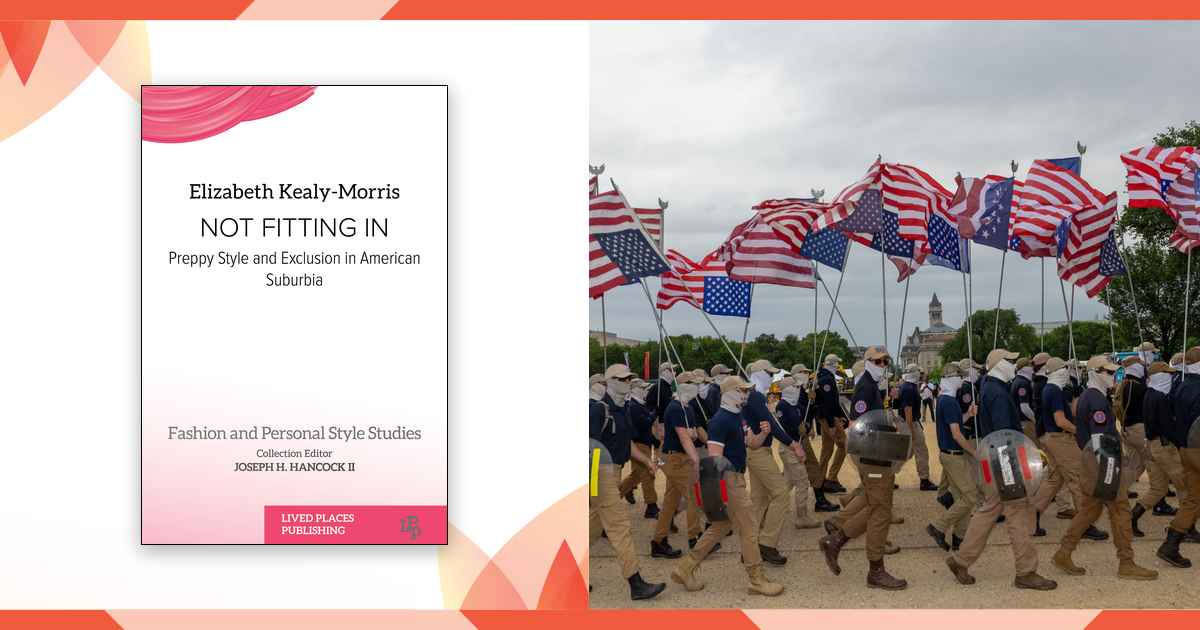
On 4 July 2026, as the United States marked the 250th anniversary of its independence, hundreds of masked men moved through Washington, D.C. They marched near the Capitol, travelled on the Metro chanting nationalist slogans (Lawder and Winter, 2026). They belonged to Patriot Front, a white nationalist organisation that emerged following the 2017 Unite the Right rally in Charlottesville, VA (Kealy-Morris and Porter, 2026) (Figure 1).
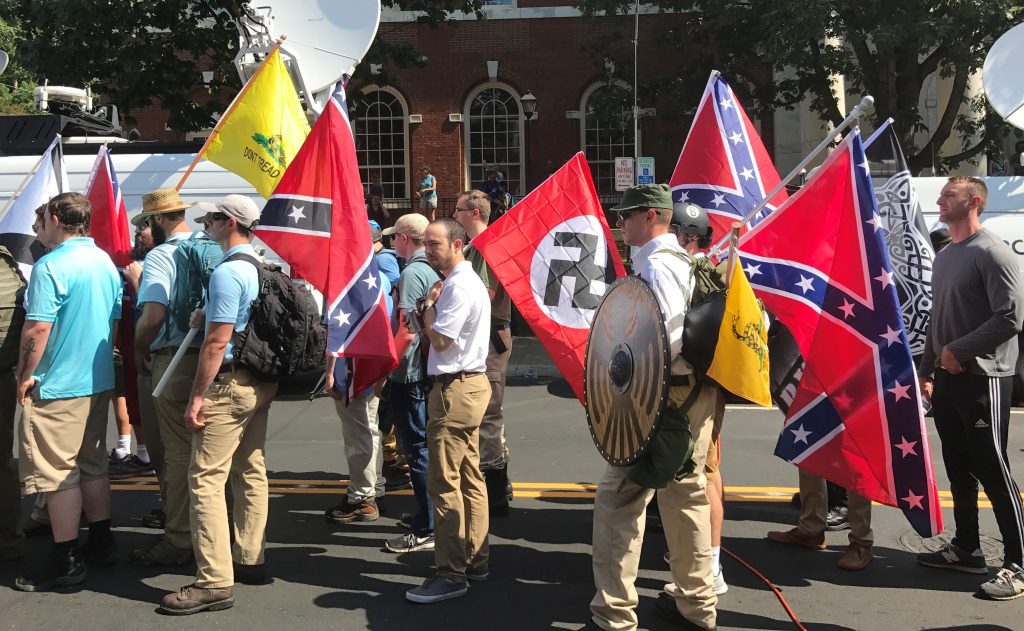
There was something strikingly familiar about what they wore: khaki trousers, dark blue shirts, baseball caps, and sunglasses. Patriot Front added white face coverings, insignia and flags, transforming otherwise ordinary garments into a coordinated political uniform. Those khakis matter. My newly published book, Not Fitting In: Preppy Style and Exclusion in American Suburbia (Kealy-Morris, 2026), traces the histories of precisely these kinds of clothes. It asks how apparently unremarkable garments become connected to ideas about who belongs in America, who appears respectable and who gets to ‘fit in’.
The story takes us back to the American suburb. Following the Second World War, millions of white middle-class Americans moved from cities into expanding suburban developments. This transformation was supported by government policy, new highways, mortgage programmes and the G.I. Bill, while racial discrimination profoundly shaped who was able to participate in the suburban American Dream. Not Fitting In places the development of American smart casual dress within this history.
A distinctive wardrobe accompanied the new suburban lifestyle. Khaki chinos, polo shirts and other sportswear separates offered something increasingly important to postwar Americans: clothes that appeared relaxed while continuing to communicate respectability. By 1960, American Fabric and Fashion was describing khakis as part of a ‘suburbanite lifestyle’ (p. 81), reflecting the spread of clothing once associated with collegiate life into mainstream American wardrobes.
The clothes were casual, although their cultural meanings were anything other than simple. The book follows smart casual style through another important American institution: the elite college campus. Ivy League men popularised button-down shirts, chinos and related sportswear, creating a sartorial language that came to signify an apparently effortless kind of American male privilege. As I argue in Not Fitting In, Ivy style allowed affluence to be masked as casualness, embedding classed and racialised values within clothes that could appear entirely neutral.
Over subsequent decades, variations of this look became extraordinarily successful. Preppy and smart casual clothing travelled far beyond elite universities and wealthy northeastern suburbs. The polo shirt and khaki trouser became staples of American wardrobes and eventually part of a globally recognisable image of Americanness. That history makes what happened in Washington this July particularly revealing. Patriot Front’s clothing does not resemble the spectacular dress we might traditionally associate with political extremism. There are no military dress uniforms or elaborate paramilitary costumes. Remove the masks, insignia and flags and much of the wardrobe is remarkably ordinary.
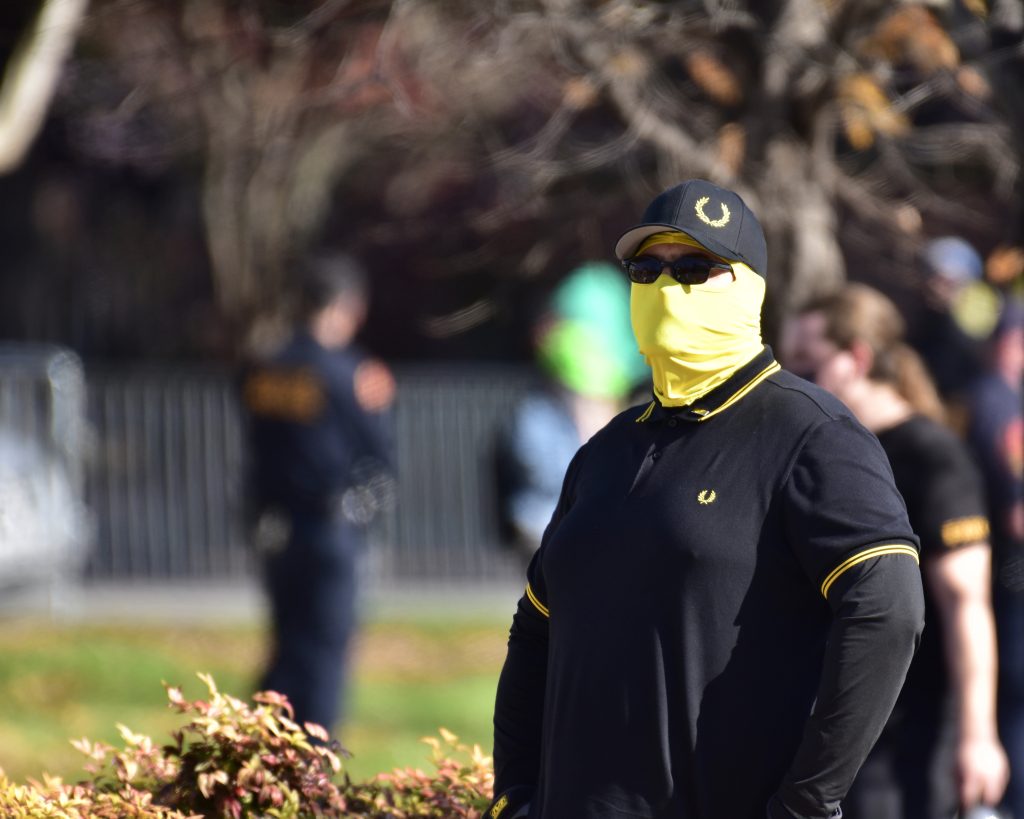
This ordinariness is precisely what makes the clothing worth examining. My research with Matthew Porter (Kealy-Morris and Porter, 2026) into the dress of the American far right has considered how groups including Patriot Front (Figure 2) and the white chauvinist Proud Boys (Belam and Gabbatt, 2020) (Figure 3) draw upon smart casual styles to construct particular versions of Americanness. Everyday clothing can become an ideological uniform, allowing ideas about nationalism, masculinity and belonging to be communicated through garments already embedded within American cultural memory.
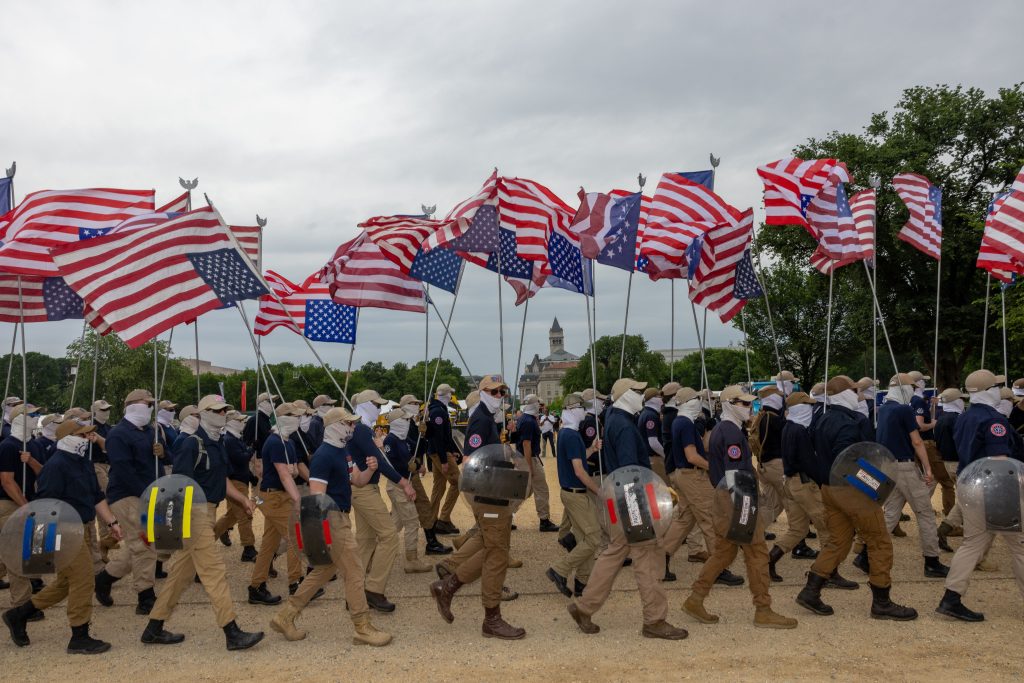
Members of the far-right group Patriot Front are seen marching through Washington, DC on May 13th, 2023.
Patriot Front DC March, Washington, DC – 13 May 2023
The Fourth of July march makes this relationship unusually visible. Patriot Front members marched through the nation’s capital wearing a highly coordinated version of an established American sartorial vocabulary while chanting ‘Reclaim America’. They carried American flags alongside Confederate flags and variations of the national flag (Oladipo, 2026). The date amplified those choices. This was not simply a demonstration occurring on another Saturday—it took place as the country commemorated 250 years of independence.
Clothes, flags, place and anniversary therefore worked together. The word ‘reclaim’ is especially significant. ‘Reclaim America’ from whom? And return it to what? These questions echo ones running throughout Not Fitting In. The book examines the growth of American suburbia alongside the exclusions embedded within the American Dream. Developments celebrated for extending home ownership and middle-class prosperity were also shaped by racial restrictions and discriminatory housing practices. The relaxed suburban wardrobe that developed within this environment consequently carries a more complicated history than its apparent neutrality suggests. This does not mean that khaki trousers or polo shirts are inherently conservative, exclusionary or extremist. Clothing never possesses a single permanent political meaning. Millions of people wear these garments without communicating any such ideology.
The important question is what political movements can make familiar clothes mean. Far-right groups understand that dress communicates before anyone speaks. Uniformity produces collective identity. Repetition produces recognition. Familiarity can produce legitimacy. A group dressed in recognisable American casualwear can visually position itself within a story about ordinary American men even while advancing an exclusionary definition of who counts as American.
That tension lies at the centre of Not Fitting In. The book began with my experience of growing up in an upper-middle-class Massachusetts suburb and trying to negotiate preppy expectations while wearing a spinal brace. From that intimate experience emerged a much broader question about dress and belonging: how do clothes help determine which bodies appear to
More about Elizabeth Kealy-Morris’s book published by LPP:
What effect does the lack of inclusion of a particular style have on the social and personal identity of someone it excludes?

We want our books to be available to as many people as possible. If you’d like to purchase an individual copy, please email us and we’ll give you a discount code: