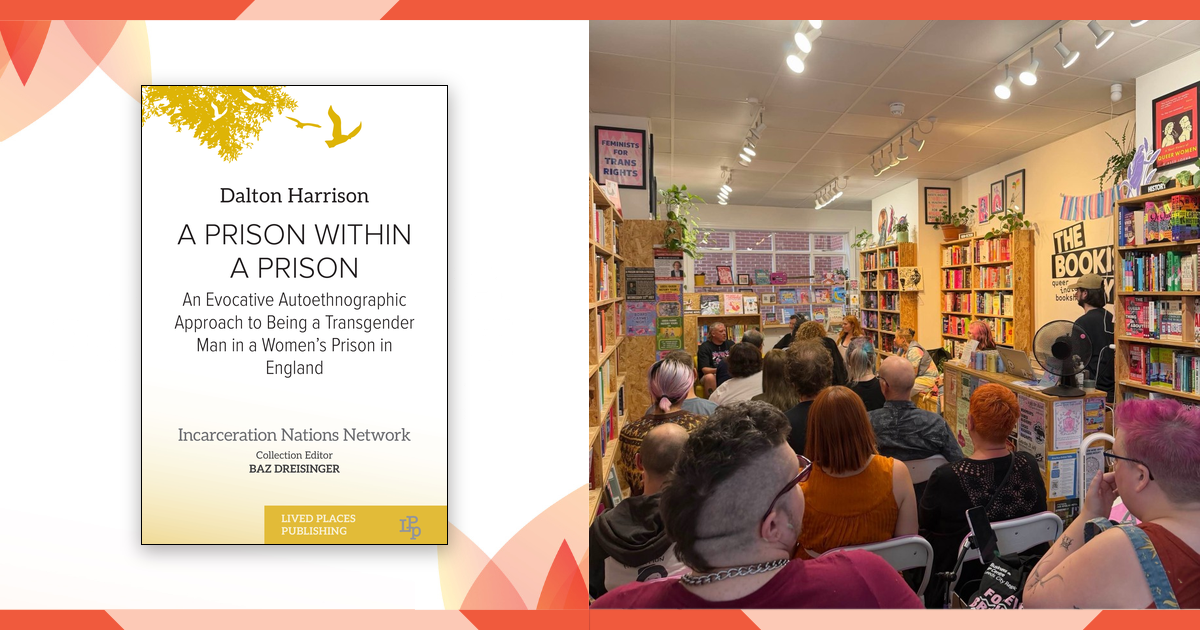
When we look at the current literature in criminal justice settings in England, we find that there is a hyperfocus on transgender women, both through policy, health, law, politics and media that stretches through to public opinion; there is little known about transgender men. This is further seen throughout history in gender inequalities surrounding those assigned as men and women at birth and is reflected in how structural stigma impacts already marginalised lives.
But in a system that only recognises birth gender, how do transgender individuals impact these institutions? When we look at the HMPPS Offender Equalities Annual Report 2024-25, it shows that there is an increase of 15% in the transgender population compared with previous years, while the main prison population is stable. There could be many reasons, but one thing is clear: researchers tend to like to group LGBTQ experiences together. So how can we start to address this gap, and how do researchers access these hidden populations?
As an academic researcher, I have encountered many of the same obstacles that other researchers face regarding access and political hypersensitivity around transgender people in prison. As an undergraduate studying criminal Justice and criminology, I saw no other way to address this gap in research than to become the subject of the study, and that was where autoethnography became my research method.
This book is based on my undergraduate and master’s dissertations and the lack of representation I saw in literature. I never saw my own journey in any studies, especially surrounding vulnerability, domestic abuse, early days in custody, prison and rehabilitation pathways. This book became a way to tell my story about being a transgender man in the criminal justice system.
Having bigger Conversations and finding a place at the table
Making room for lived experience is vital in a world that looks to risk management and statistics to redefine how we engage with society. Where technology is dominating decision-making, having bigger conversations centred on lived experience has never been more important.
I was shaped by hate born in the year when politics was not only dividing Britain but shaping it into the society we see today. In the months before I was born, Margaret Thatcher came into power, and she was creating laws to match her views that tapped into the fear surrounding LGBTQ people. While I grew up in the Section 28 era (This law stopped the promotion of sexuality in public sectors and teaching, which in turn halted funding and had devastating real-world impacts on LGBTQ youth). I found my life was surrounded by people who agreed with this, and all I could do was try to hide myself.
 So, what is a school-to-prison pipeline for young trans youth? My Book looks at what shaped my life before prison, whereas most studies examine pathways to prison as if in a vacuum. This starts at the beginning, with mistrust and violence shaping young lives. How trans men are not only abused by women and men, but are also subjected to institutional neglect, which further shapes their prison experience.
Each chapter looks at early days in custody, bullying, staff, vulnerability, transitioning into a man in gendered structures, identity, rehabilitation and release. The book blends academic discourse and evocative autoethnography with poetry, creative writing, and storytelling to challenge perceptions and invite the reader to see the world from a different angle.
Transgender men have been socialised as women, attacked, and ridiculed by both genders and overlooked for long enough. Sometimes one journey is enough to start a revolution. This is my journey, and I hope it helps others start theirs.
More about Dalton Harrison’s book published by LPP:
How do transgender males in British female prisons navigate identity, and how does creative expression help?

We want our books to be available to as many people as possible. If you’d like to purchase an individual copy, please email us and we’ll give you a discount code: